Monthly Archives: March 2026

Hard-Wired Wetware IV: The Case Against Rebalancing: Why The Asymmetrical Integration Model (AIM) May Be Self-Correcting

This paper interrogates the normative extension of the Asymmetric Integration Model by examining whether asymmetrical integration may represent a dynamically stabilised equilibrium rather than a structural failure. It explores market feedback, legitimacy constraints, optimisation adaptation, and functional specialisation as endogenous corrective mechanisms, arguing that asymmetry may be constrained by competitive and economic forces rather than requiring deliberate architectural rebalancing.

Continue reading

The Age-Gated Internet: Child Safety, Identity Infrastructure, and the Not So Quiet Re-Architecting of the Web

Governments around the world are introducing age-verification and youth social-media laws, but these policies may be doing far more than protecting children. They are quietly pushing identity into operating systems, app stores, and the core infrastructure of the internet, shifting governance down the stack and creating new enforcement chokepoints. Along the way, they reshape platform power, favour large incumbents, and redefine how users access digital environments. As illustrated in “Evolution of Internet Architecture (1990–2035)”, this may signal a transition toward an “identity-mediated” web. This article documents those changes, drawing on historical precedents from UK identity systems (including the UK identity card programme) and US telecommunications, and comparative developments across multiple jurisdictions, to show how independent regulatory efforts are converging on a shared architectural shift.

Continue reading

If Your Enterprise Architect Cannot Draw Your Core Architecture From Memory, What Are They?

Enterprise architecture is not the maintenance of modelling tools or diagram repositories; it is the cognitive ownership of structural intent. An enterprise architect must be able to articulate, from memory, the organisation’s core domains, identity flows, state ownership, and integration topology. When architecture lives primarily in tools rather than in the architect’s internal model, complexity is documented rather than reduced, and structural drift becomes institutionalised.

Continue reading

Hard-Wired Wetware III: Rebalancing The Asymmetric Integration Model (AIM)

This paper introduces the Asymmetric Integration Model (AIM), arguing that in post-LLM digital environments, automation generates conversational scale while humans supply consequence-bearing legitimacy. As optimisation regimes prioritise engagement density and persistence, affective cost is distributed to participants while control remains centralised. The proposed framework shifts debate from content moderation to architectural design, outlining pathways to rebalance asymmetry without rejecting human–machine integration.

Continue reading

Ides of March 2026: Motivational Quotes on Betrayal, Resilience, and Overcoming Hardship

Throughout history, words have served as powerful tools for inspiration, warning, and encouragement. Whether it’s facing betrayal, enduring hardship, or rising above challenges, the right quote at the right time can provide strength and perspective. Below is a collection of timeless motivational quotes that speak to resilience, betrayal, and overcoming adversity.

Continue reading

Re-Legacy: The Debt of Deferred Structure

Cloud migration often preserves rather than eliminates legacy when structural redesign is deferred. Re-legacy occurs when outdated domain boundaries, embedded behavioural coupling, and implicit integrations are rehosted under modern infrastructure abstractions. This compounds structural debt, financialises complexity, and stabilises fragility under the banner of transformation. True modernisation requires deliberate structural intervention (redefining boundaries, clarifying state ownership, and reducing coupling) not merely upgrading the substrate.

Continue reading

The Curious Absence of Cyber in Local Government Technology Strategy

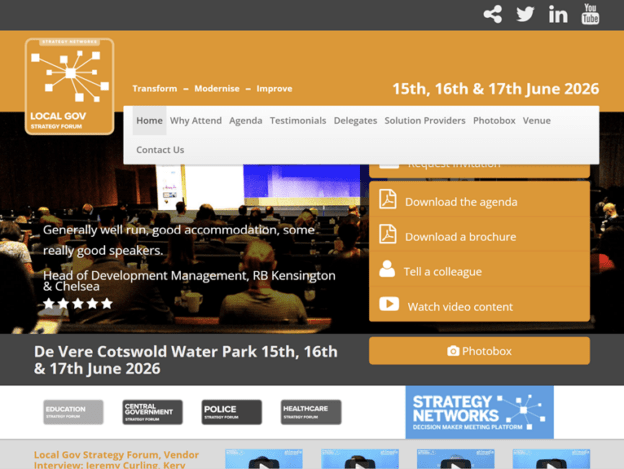
A forthcoming Local Government Strategy Forum event highlights the technology investment priorities of councils representing nearly £2 billion in budgets. The data shows strong interest in AI, automation and service transformation, but no explicit mention of cybersecurity or risk management. This article explores what that absence reveals about how local government frames technology strategy, and why resilience often remains invisible in leadership investment narratives.

Continue reading

Hard-Wired Wetware II: the Post-LLM Web Asymmetric Integration Model (AIM) Defined

The post-LLM web is not replacing humans with machines. It is integrating humans into machine-generated scale. This paper formalises the Asymmetric Integration Model (AIM), arguing that as synthetic systems produce abundant conversational substrate, human participants supply the scarce resource of consequence-bearing legitimacy. Contemporary platforms are shifting from attention extraction toward asymmetrical affective integration.

Continue reading

Thomas Pynchon, the Problem of Scale, and the Emergence of Densified Noir

This essay argues that Thomas Pynchon’s career alternates between maximalist “cathedral” novels that map the formation of modern systems and more compressed works that depict life inside those systems. Rather than decline, the shift from Gravity’s Rainbow to Inherent Vice reflects historical contraction. Shadow Ticket suggests a late hybrid form: densified noir.

Continue reading

Data Is a Symptom of Function: Migrating RDBMS Estates Is Not Transformation

Migrating legacy RDBMS estates to the cloud is often framed as a transformation, but relocating data rarely modernises systems. Data is a symptom of underlying business function, encoded behaviour, and dense integration. Without upstream redesign (defining capabilities, decomposing behaviour, clarifying boundaries, and extracting embedded logic) cloud migration preserves complexity, creating “re-legacy” at scale rather than true modernisation.

Continue reading

Hard-Wired Wetware I: From Attention Extraction to Human Integration

As automation surpasses human traffic and synthetic actors permeate public, semi-private, and gaming ecosystems, the web is reorganising around a new extraction layer. Large language models collapse the cost of human emulation, shifting platforms from attention capture to human integration. The next phase of the internet does not replace people with machines. It recruits them as psychological infrastructure: wetware that supplies legitimacy, empathy, and consequence to autonomous systems.

Continue reading

Can’t Understand Neurodivergent Thinking

Using the February 2026 BAFTA controversy involving Tourette’s activist John Davidson as a cultural flashpoint, this essay examines why neurodivergent people are instinctively rejected. Blending research, lived experience, and sector insight, it argues that discomfort with autistic cognition is not merely institutional but biological and tribal. Instinct, however, is not justification. Inclusion requires discipline, not sentiment. Tolerance must extend beyond what feels comfortable.

Continue reading