Tag Archives: Cyber Sectoral Analysis

When It Comes To Cyber The Midlands Defence Blueprint Is Polite Fiction

The Midlands Defence & Security Blueprint presents itself as decisive and strategic, but in reality it repeats the same structural failures that undermined Midlands Engine. Cyber remains subordinated, underfunded, and ownerless, while coordination is mistaken for delivery. Written from the perspective of a practitioner who has built cyber capability on the ground, this article argues that resilience will not come from another blueprint, but from funded authority, real centres, and delivery.

Continue reading

Cyber deception at UK scale: what the NCSC trials tell us — and what they still don’t

The NCSC’s cyber deception trials mark a shift from theory to evidence, testing whether deception can deliver real defensive value at scale. This article examines what those trials show — and what they leave unresolved. It argues that cyber deception is best understood as an evolution of honeypots, powerful but operationally demanding, and highly dependent on organisational maturity. While effective in well-instrumented environments, deception is not an SME-level control and risks being over-sold. Without clear metrics, safety discipline, and honest maturity gating, its promise remains conditional.

Continue reading

UK Flywheel and the Missing Middle: Cyber Scenes from the National Theatre

A first-hand account of the UK Flywheel event at the National Theatre: part love letter to the UK cyber ecosystem, part demolition of the comforting myths around funding, government “capability”, and NCSC’s role. From the NCSC Annual Review to West Midlands Cyber Hub, this is what the day looked like from the founder trenches rather than the podium.

Continue reading

The NCSC Annual Review 2025: Between Capability and Stasis

The article examines the NCSC Annual Review 2025 as both a testament to accomplishment and a warning. It praises the NCSC’s technical competence but questions its identity: regulator, delivery agency, or state-backed market player? It highlights contradictions — DSIT hailing it as “the jewel in the crown” while eroding its remit, diluting CyberFirst into TechFirst, ending its startup work, and overstating the benefits of Cyber Essentials. The piece concludes that the NCSC is overextended and under-defined, needing clarity of purpose more than new initiatives — less performance, more direction.

Continue reading

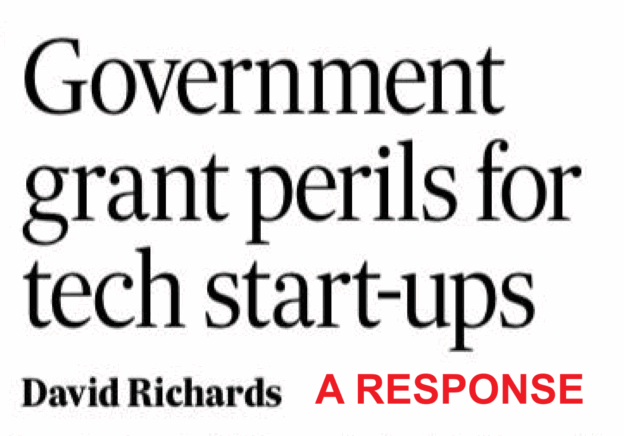
The Grant Delusion: Why Government Should Commission, Not Compete, in UK Innovation

David Richards MBE is right, the UK’s innovation economy has become addicted to grants, not growth. But the problem isn’t funding itself; it’s design. Innovate UK and its peers were meant to bridge the early-stage gap between research and market, but instead became destinations in their own right. Government now competes with, rather than commissions, the innovators it should empower. The fix is simple: commission outcomes, not applications; fund practitioners, not paperwork.

Continue reading

Cyber, Growth, and Regional Futures: A Comparative Synthesis of Six 2025 Reports: From Fragmentation to Framework

2025 has been a year of noise, policy papers, strategies, and growth plans, each declaring the next leap for UK cyber and regional innovation. But noise isn’t movement. Across six flagship reports, DSIT’s Cyber Growth Action Plan, WMCA’s Futures and Growth Plans, the Tech Nation 2025 report, the Midlands Engine Cyber & Defence report, and DSIT’s Cyber Skills 2025, the pattern repeats: good intent, weak execution, no continuity. Together, they map £77 billion in Gross Value Added (GVA), 143,000 cyber professionals, and £17 billion in projected uplift, but no coherent operating model. This paper builds one: treating cyber as economic infrastructure and the West Midlands as the proof-of-concept for a practitioner-led, resilient growth framework.

Continue reading

The West Midlands Growth Plan 2025: Blueprint or Turning Point?

The West Midlands Growth Plan 2025 is the most detailed and credible regional strategy in a decade, a £17.4 billion growth blueprint built on data, pragmatism, and belief in place-based delivery. It models a region that can finally close its £5-per-hour productivity gap and turn polycentric geography into economic strength. Yet it still risks the same fate as its predecessors: ambition without execution. My critique goes beyond the press releases, exposing funding silos, institutional churn, and the absence of practitioner leadership, and proposes a hard-edged, engineer’s roadmap for delivery. Cyber must be treated as infrastructure; innovation must be systemic, not decorative; and governance must have teeth. The call is simple: stop admiring the plan and start engineering the outcome. Continuity, accountability, and practitioner leadership; the rest is noise.

Continue reading

Cyber Security Skills in the UK Labour Market 2025: A Critical Analysis

This article critically examines the Cyber Security Skills in the UK Labour Market 2025 report, highlighting strengths, weaknesses, and regional implications. It synthesises the findings into a practitioner-academic analysis, with recommendations for aligning graduate supply, employer demand, and future skills in areas such as AI and cyber resilience.

Continue reading

Unlocking the UK’s Growth Potential: A Critical and Constructive Review of the Tech Nation Report 2025

The Tech Nation Report 2025 reaffirms the UK’s position as Europe’s leading tech hub, valued at $1.2 trillion and home to 163 unicorns. Yet it also exposes structural barriers, capital bottlenecks, talent shortages, regional imbalances, and over-reliance on London and AI. This article critically reviews the report, adds practitioner-led insights, and proposes a roadmap for sustainable and regionally inclusive growth.

Continue reading

Pre-Launch Reflections: The West Midlands Cyber Hub

The pre-launch of the West Midlands Cyber Hub at Enterprise Wharf brought together over 100 leaders from across the region’s cyber ecosystem, CISOs, CTOs, startups, universities, government, community partners, students, practitioners, and members of the interested public. What began as a vision to give the West Midlands a proper home for cyber has now become real, supported by DSIT, Innovate UK, Aston University, West Midlands Cyber Resilience Centre, Midlands Cyber, TechWM and the Innovation Alliance for the West Midlands.

Continue reading

From Policy to Place: Aligning the UK Cyber Policy with the West Midlands Futures Growth Plan

The UK Cyber Policy 2025 and the West Midlands Futures Green Paper 2025 set bold agendas but risk gaps without practitioner-led delivery. The national policy offers ambition but lacks continuity, metrics, and practitioner voice. The regional plan lays strong scaffolding but underweights cyber, leaning too heavily on AI. A ten-point roadmap shows the way forward: formally recognise cyber as a standalone cluster, unify governance, foster community, attract investment, establish a hub, launch a festival, rebuild narrative, reform SME funding access, enhance talent strategy, and create a regional benchmarking index. Anchored in the West Midlands Cyber Hub, this approach can balance national ambition with regional delivery, making resilience a driver of inclusive growth.

Continue reading

The West Midlands Futures Green Paper (2025): Synopsis, Key Takeaways, Critique, and Recommendations

The West Midlands Futures Green Paper sets a bold agenda, but risks leaning too heavily on AI. Cyber must be treated as a foundational enabler across every sector, from advanced manufacturing to healthcare, and anchored in a practitioner-led West Midlands Cyber Hub. Such a hub can drive assurance, skills conversion, supply-chain uplift, and regional equity, ensuring growth is both resilient and inclusive.

Continue reading

UK Cyber at a Crossroads: Three Essays on Policy, Practice, and Growth, in Reaction to the 2025 Cyber Growth Action Plan

The UK’s cyber policy has made progress but suffers from churn, overlap, and regional imbalance. The 2025 Cyber Policy sets out ambition but lacks continuity and practitioner voice. This three-part series traces the history, critiques the new policy, and argues for a practitioner-led, regionally balanced ecosystem to stabilise the base finally.

Continue reading

Stabilising the Base: From Patchwork to Platform in the UK Cyber Ecosystem

This article argues that stabilisation must be the UK’s priority. Drawing together the lessons of history and the critique of the DSIT Cyber Growth Action Plan 2025, it calls for a practitioner-led ecosystem that ends programme churn, addresses regional imbalance, unlocks university IP, and resists government attempts to build commercial products. The vision is of hubs and networks rooted in delivery and credibility — a cyber base resilient enough to sustain long-term growth. Unless these foundations are secured, the UK will remain trapped in cycles of ambition without durability.

Continue reading

Reviewing the 2025 UK Cyber Growth Action Plan: Promise, Blind Spots, and the Challenge of Continuity

This article, written in reaction to the DSIT Cyber Growth Action Plan 2025, reviews and critiques the government’s new approach. It recognises what the policy gets right — framing resilience as growth, creating safe havens, and calling for a one-team response — but also highlights what is missing: metrics, continuity, practitioner voice, and regional balance. Without these, the new policy risks becoming rhetoric rather than a platform for real progress. Unless the UK moves decisively from aspiration to delivery, the 2025 Cyber Growth Action Plan will join its predecessors as another missed opportunity.

Continue reading

A Potted History of the UK’s Cyber Economy: From Secrecy to Sector

This article, written in reaction to the DSIT Cyber Growth Action Plan 2025, traces the uneven history of the UK’s cyber economy. From CESG’s secretive assurance role to NCSC’s public authority and DSIT’s contested remit, the story is one of incremental gains but persistent churn. Programmes such as Cyber Essentials, CyberFirst, CyberASAP, Cyber Runway, and Cyber Resilience Centres have delivered value but lacked continuity, scale, and coherence. Unless the government commits to stabilisation and long-term delivery, the UK will continue to recycle initiatives rather than build a durable cyber base.

Continue reading

CyberFirst Celebration in the West Midlands: Reflections on What Makes Cyber Special

A reflection on the CyberFirst Celebration in the West Midlands, marking its transition to TechFirst. The event highlighted achievements, explored what makes cyber unique, and underlined the importance of maintaining the sector’s distinctive strengths, especially its uniquely inquisitive culture, as the programme broadens.

Continue reading

West Midlands Cyber Hub Diaries: Day One (Or Perhaps Day Sixty)

The West Midlands Cyber Hub marks a long-held ambition to give the region a central home for cyber. Building on the rebooted West Midlands Cyber Working Group (WM CWG), the Hub is designed to strengthen community coherence, increase investment, and connect students, SMEs, enterprises, and universities in a neutral space. Supported by DSIT, Innovate UK, Aston University, TechWM, and the Innovation Alliance for the West Midlands, the Hub will open its first phase at Enterprise Wharf in Birmingham, forming the core of a hub-and-spoke model across the region. The project team, led by Sevgi Aksoy and I (Wayne Horkan), with Rebecca Robinson as PM, is preparing for a pre-launch event on 30th September 2025.

Continue reading

Cyber Collaboration in the West Midlands: Skills, Strategy, and a Shared Future

On 29 April 2025, the West Midlands Cyber Working Group met at Gowling WLG in Birmingham to explore how collaboration can drive cyber resilience, skills development, and strategic growth across the region. Speakers, including Andy Hague (TechWM), Dan Rodrigues (CyberFirst), Dave Walker (ex-AWS), Sarah Gray and Louise Macdonald (Gowling WLG), and Wayne Horkan (WM CWG Chair) shared insights on scaling regional leadership, building inclusive talent pipelines, addressing AI security risks, and navigating evolving legal frameworks. The event underscored a shared ambition to position the West Midlands not just as a participant but as a leader in the UK’s cyber ecosystem.

Continue reading

Tech Nation Rising Stars Midlands Final 2025 – Notes from the Canopy

There’s a quiet satisfaction in sitting on the edge of things, absorbing detail, thinking clearly, watching structure unfold. Last April, at The Canopy at The Bond in Birmingham’s Digbeth district, I was glad to attend the Midlands Regional Final of Tech Nation Rising Stars 2025. This wasn’t just a pitch competition; it was a sharp snapshot of the region’s entrepreneurial promise, delivered without bluster but full of energy.

Continue reading