Monthly Archives: December 2025

Shakespeare Is My Meat; I Sup Upon A Classicalist

Do you like Shakespeare? Me too. But I don’t need to go “all in” and lose sight you can just “enjoy” the stuff. This essay mounts a post-structuralist assault on Shakespearean canon-worship, arguing that four centuries of criticism function less as interpretation than as institutional maintenance. It interrogates why Shakespeare must always matter, why scholars struggle to like the plays without theory, and why universality is retroactively imposed. By stripping away reverence, the essay asks an obscene but clarifying question: “What if they are just entertainment for Elizabethan wankers?” and insists on Shakespeare’s mortality as a condition of honest criticism.

Continue reading

Gold & Platinum Layer Architecture After Silver

Modern Financial Services data platforms require more than Bronze, Silver, and Gold layers to manage complexity, meaning, and governance. While Silver provides current-state truth and Gold delivers consumption-driven business meaning, neither resolves enterprise-wide semantics. This article introduces the Platinum layer as the conceptual truth layer, reconciling how different domains, systems, and analytical communities understand the same data. Together, Gold and Platinum bridge operational use, analytical insight, and long-lived domain semantics, enabling clarity, velocity, and governed understanding at scale.

Continue reading

Managing a Rapidly Growing SCD2 Bronze Layer on Snowflake: Best Practices and Architectural Guidance

Slowly Changing Dimension Type 2 (SCD2) patterns are widely used in Snowflake-based Financial Services platforms to preserve full historical change for regulatory, analytical, and audit purposes. However, Snowflake’s architecture differs fundamentally from file-oriented lakehouse systems, requiring distinct design and operational choices. This article provides practical, production-focused guidance for operating large-scale SCD2 Bronze layers on Snowflake. It explains how to use Streams, Tasks, micro-partition behaviour, batching strategies, and cost-aware configuration to ensure predictable performance, controlled spend, and long-term readiness for analytics and AI workloads in regulated environments.

Continue reading

Managing a Rapidly Growing SCD2 Bronze Layer on Databricks: Best Practices and Practical Guidance ready for AI Workloads

Slowly Changing Dimension Type 2 (SCD2) patterns are increasingly used in the Bronze layer of Databricks-based platforms to meet regulatory, analytical, and historical data requirements in Financial Services. However, SCD2 Bronze tables grow rapidly and can become costly, slow, and operationally fragile if not engineered carefully. This article provides practical, production-tested guidance for managing large-scale SCD2 Bronze layers on Databricks using Delta Lake. It focuses on performance, cost control, metadata health, and long-term readiness for analytics and AI workloads in regulated environments.

Continue reading

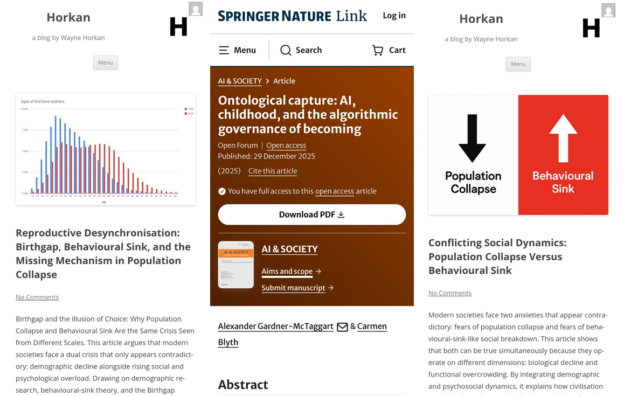
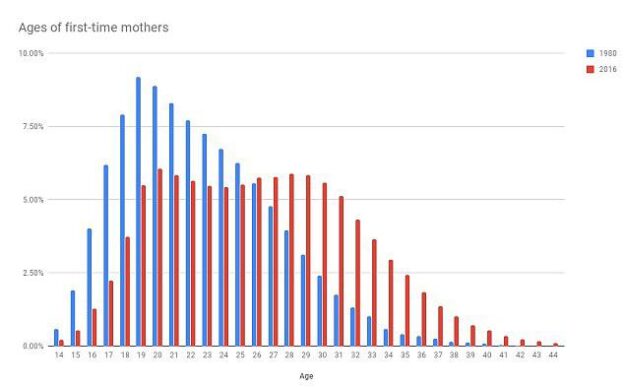
Reproductive Desynchronisation: Birthgap, Behavioural Sink, and the Missing Mechanism in Population Collapse

Birthgap and the Illusion of Choice: Why Population Collapse and Behavioural Sink Are the Same Crisis Seen from Different Scales. This article argues that modern societies face a dual crisis that only appears contradictory: demographic decline alongside rising social and psychological overload. Drawing on demographic research, behavioural-sink theory, and the Birthgap thesis, it shows how delayed parenthood and declining fertility coexist with intensified competition, urban stress, and digital saturation. The core mechanism is reproductive and social desynchronisation, which produces biologically emptier societies that nevertheless feel increasingly crowded. Together, these dynamics reveal a structural failure of modern social organisation rather than a matter of individual choice. The illusion of choice is that there is a choice.

Continue reading

Cyber deception at UK scale: what the NCSC trials tell us — and what they still don’t

The NCSC’s cyber deception trials mark a shift from theory to evidence, testing whether deception can deliver real defensive value at scale. This article examines what those trials show — and what they leave unresolved. It argues that cyber deception is best understood as an evolution of honeypots, powerful but operationally demanding, and highly dependent on organisational maturity. While effective in well-instrumented environments, deception is not an SME-level control and risks being over-sold. Without clear metrics, safety discipline, and honest maturity gating, its promise remains conditional.

Continue reading

Production-Grade Testing for SCD2 & Temporal Pipelines

The testing discipline that prevents regulatory failure, data corruption, and sleepless nights in Financial Services. Slowly Changing Dimension Type 2 pipelines underpin regulatory reporting, remediation, risk models, and point-in-time evidence across Financial Services — yet most are effectively untested. As data platforms adopt CDC, hybrid SCD2 patterns, and large-scale reprocessing, silent temporal defects become both more likely and harder to detect. This article sets out a production-grade testing discipline for SCD2 and temporal pipelines, focused on determinism, late data, precedence, replay, and PIT reconstruction. The goal is simple: prevent silent corruption and ensure SCD2 outputs remain defensible under regulatory scrutiny.

Continue reading

Event-Driven CDC to Correct SCD2 Bronze in 2025–2026

Broken history often stays hidden until remediation or skilled-person reviews. Why? Event-driven Change Data Capture fundamentally changes how history behaves in a data platform. When Financial Services organisations move from batch ingestion to streaming CDC, long-standing SCD2 assumptions quietly break — often without immediate symptoms. Late, duplicated, partial, or out-of-order events can silently corrupt Bronze history and undermine regulatory confidence. This article sets out what “correct” SCD2 means in a streaming world, why most implementations fail, and how to design Bronze pipelines that remain temporally accurate, replayable, and defensible under PRA/FCA scrutiny in 2025–2026.

Continue reading

How to Safely Increase System Volume on Windows

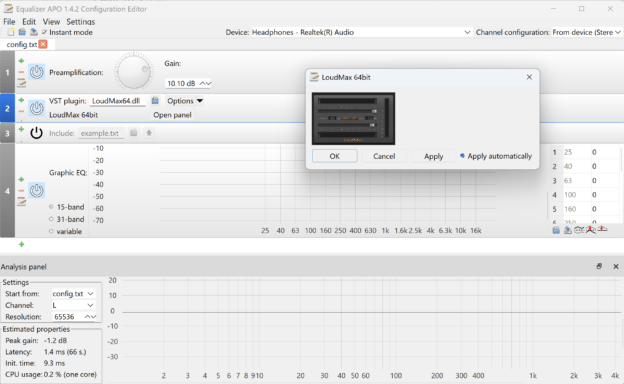
A practical guide to safely increasing system-wide audio volume on Windows using Equalizer APO and the LoudMax VST plugin. The article explains how to install and configure both tools to achieve up to 20 dB of additional loudness without clipping or distortion, using true-peak limiting and clean gain staging suitable for everyday listening, gaming, and media consumption.

Continue reading

Golden-Source Resolution, Multi-Source Precedence, and Regulatory Point-in-Time Reporting on SCD2 Bronze

Why Deterministic Precedence Is the Line Between “Data Platform” and “Regulatory Liability”. Modern UK Financial Services organisations ingest customer, account, and product data from 5–20 different systems of record, each holding overlapping and often conflicting truth. Delivering a reliable “Customer 360” or “Account 360” requires deterministic, audit-defensible precedence rules, survivorship logic, temporal correction workflows, and regulatory point-in-time (PIT) reconstructions: all operating on an SCD2 Bronze layer. This article explains how mature banks resolve multi-source conflicts, maintain lineage, rebalance history when higher-precedence data arrives late, and produce FCA/PRA-ready temporal truth. It describes the real patterns used in Tier-1 institutions, and the architectural techniques required to make them deterministic, scalable, and regulator-defensible.

Continue reading

Entity Resolution & Matching at Scale on the Bronze Layer

Entity resolution has become one of the hardest unsolved problems in modern UK Financial Services data platforms. This article sets out a Bronze-layer–anchored approach to resolving customers, accounts, and parties at scale using SCD2 as the temporal backbone. It explains how deterministic, fuzzy, and probabilistic matching techniques combine with blocking, clustering, and survivorship to produce persistent, auditable entity identities. By treating entity resolution as platform infrastructure rather than an application feature, firms can build defensible Customer 360 views, support point-in-time reconstruction, and meet growing FCA and PRA expectations.

Continue reading

Handling Embedded XML/JSON Blobs to Audit-Grade SCD2 Bronze

Financial Services platforms routinely ingest XML and JSON embedded in opaque fields, creating tension between audit fidelity and analytical usability. This article presents a regulator-defensible approach to handling such payloads in the Bronze layer: landing raw data immutably, extracting only high-value attributes, applying attribute-level SCD2, and managing schema drift without data loss. Using hybrid flattening, temporal compaction, and disciplined lineage, banks can transform messy blobs into audit-grade Bronze assets while preserving point-in-time reconstruction and regulatory confidence.

Continue reading

From SCD2 Bronze to a Non-SCD Silver Layer in Other Tech (Iceberg, Hudi, BigQuery, Fabric)

Modern data platforms consistently separate historical truth from analytical usability by storing full SCD2 history in a Bronze layer and exposing a simplified, current-state Silver layer. Whether using Apache Iceberg, Apache Hudi, Google BigQuery, or Microsoft Fabric, the same pattern applies: Bronze preserves immutable, auditable change history, while Silver removes temporal complexity to deliver one row per business entity. Each platform implements this differently, via snapshots, incremental queries, QUALIFY, or Delta MERGE, but the architectural principle remains universal and essential for regulated environments.

Continue reading

From SCD2 Bronze to a Non-SCD Silver Layer in Snowflake

This article explains a best-practice Snowflake pattern for transforming an SCD2 Bronze layer into a non-SCD Silver layer that exposes clean, current-state data. By retaining full historical truth in Bronze and using Streams, Tasks, and incremental MERGE logic, organisations can efficiently materialise one-row-per-entity Silver tables optimised for analytics. The approach simplifies governance, reduces cost, and delivers predictable performance for BI, ML, and regulatory reporting, while preserving complete auditability required in highly regulated financial services environments.

Continue reading

From SCD2 Bronze to a Non-SCD Silver Layer in Databricks

This article explains a best-practice Databricks lakehouse pattern for transforming fully historical SCD2 Bronze data into clean, non-SCD Silver tables. Bronze preserves complete temporal truth for audit, compliance, and investigation, while Silver exposes simplified, current-state views optimised for analytics and data products. Using Delta Lake features such as MERGE, Change Data Feed, OPTIMIZE, and ZORDER, organisations, particularly in regulated Financial Services, can efficiently maintain audit-proof history while delivering fast, intuitive, consumption-ready datasets.

Continue reading

Operationalising SCD2 at Scale: Monitoring, Cost Controls, and Governance for a Healthy Bronze Layer

This article explains how to operationalise Slowly Changing Dimension Type 2 (SCD2) at scale in the Bronze layer of a medallion architecture, with a focus on highly regulated Financial Services environments. It outlines three critical pillars: monitoring, cost control, and governance, needed to keep historical data trustworthy, performant, and compliant. By tracking growth patterns, preventing meaningless updates, controlling storage and compute costs, and enforcing clear governance, organisations can ensure their Bronze layer remains a reliable audit-grade historical asset rather than an unmanaged data swamp.

Continue reading

Advanced SCD2 Optimisation Techniques for Mature Data Platforms

Advanced SCD2 optimisation techniques are essential for mature Financial Services data platforms, where historical accuracy, regulatory traceability, and scale demands exceed the limits of basic SCD2 patterns. Attribute-level SCD2 significantly reduces storage and computation by tracking changes per column rather than per row. Hybrid SCD2 pipelines, combining lightweight delta logs with periodic MERGEs into the main Bronze table, minimise write amplification and improve reliability. Hash-based and probabilistic change detection eliminate unnecessary updates and accelerate temporal comparison at scale. Together, these techniques enable high-performance, audit-grade SCD2 in platforms such as Databricks, Snowflake, BigQuery, Iceberg, and Hudi, supporting the long-term data lineage and reconstruction needs of regulated UK Financial Services institutions.

Continue reading