Category Archives: architecture

Data Is a Symptom of Function: Migrating RDBMS Estates Is Not Transformation

Migrating legacy RDBMS estates to the cloud is often framed as a transformation, but relocating data rarely modernises systems. Data is a symptom of underlying business function, encoded behaviour, and dense integration. Without upstream redesign (defining capabilities, decomposing behaviour, clarifying boundaries, and extracting embedded logic) cloud migration preserves complexity, creating “re-legacy” at scale rather than true modernisation.

Continue reading

The Web’s Odd Couple: Tim Berners-Lee, Marc Andreessen, and the Yin-Yang of the Early Internet

A neat myth says the web was invented as a benevolent commons and then “commercialised” by accident. The reality is harsher and more interesting: Tim Berners-Lee built an open architecture, Marc Andreessen industrialised it, and the web’s openness made it capturable. Netscape’s dominance, the server wars, and the rise of platforms show how commons become power. For those nostalgic for a “purer” web, this essay argues that openness was never innocence, and that the commons was always destined to collide with capture. Today, the public web is a shop window; real life moved indoors. What comes next is worse: AI-mediated “engagement” with humans recruited as emotional middleware.

Continue reading

What It Means To Be A Business/Technology Architect In A Post Agile, Post AI World

What does it mean to be an architect in a post-agile, post-AI enterprise? This article explores architecture as sense-making, navigation, and organisational memory rather than artefact production. It examines the evolving role of domain and enterprise architects, the value they bring to fast-moving change programmes, and how good architecture enables speed without fragility by preserving coherence, optionality, and shared understanding over time.

Continue reading

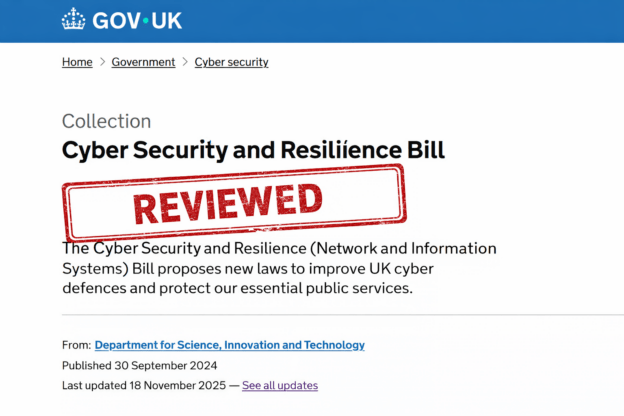
The UK Cyber Security and Resilience Bill 2025: What It Means and Why It Matters

The UK Cyber Security and Resilience Bill 2025 represents a major shift from sector-based cyber regulation to a broader national resilience framework. By expanding the NIS regime to data centres, managed service providers and critical suppliers, strengthening incident reporting, and introducing strategic governance and national security powers, the Bill closes long-standing gaps but raises challenges around proportionality, skills, regional delivery and SME impact.

Continue reading