Tag Archives: digital transformation

Re-Legacy: The Debt of Deferred Structure

Cloud migration often preserves rather than eliminates legacy when structural redesign is deferred. Re-legacy occurs when outdated domain boundaries, embedded behavioural coupling, and implicit integrations are rehosted under modern infrastructure abstractions. This compounds structural debt, financialises complexity, and stabilises fragility under the banner of transformation. True modernisation requires deliberate structural intervention (redefining boundaries, clarifying state ownership, and reducing coupling) not merely upgrading the substrate.

Continue reading

The Curious Absence of Cyber in Local Government Technology Strategy

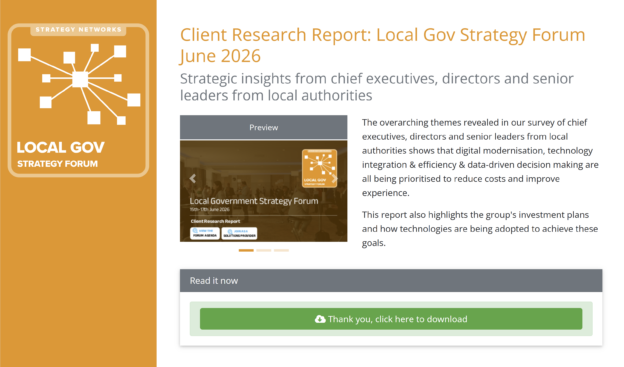
A forthcoming Local Government Strategy Forum event highlights the technology investment priorities of councils representing nearly £2 billion in budgets. The data shows strong interest in AI, automation and service transformation, but no explicit mention of cybersecurity or risk management. This article explores what that absence reveals about how local government frames technology strategy, and why resilience often remains invisible in leadership investment narratives.

Continue reading

Data Is a Symptom of Function: Migrating RDBMS Estates Is Not Transformation

Migrating legacy RDBMS estates to the cloud is often framed as a transformation, but relocating data rarely modernises systems. Data is a symptom of underlying business function, encoded behaviour, and dense integration. Without upstream redesign (defining capabilities, decomposing behaviour, clarifying boundaries, and extracting embedded logic) cloud migration preserves complexity, creating “re-legacy” at scale rather than true modernisation.

Continue reading

What It Means To Be A Business/Technology Architect In A Post Agile, Post AI World

What does it mean to be an architect in a post-agile, post-AI enterprise? This article explores architecture as sense-making, navigation, and organisational memory rather than artefact production. It examines the evolving role of domain and enterprise architects, the value they bring to fast-moving change programmes, and how good architecture enables speed without fragility by preserving coherence, optionality, and shared understanding over time.

Continue reading

A History of Risk Quantification

Risk quantification, the practice of measuring and assessing uncertainties, has evolved over centuries, reflecting humanity’s growing desire to understand and mitigate the uncertainties of life. From ancient times to the modern era, the tools, techniques, and philosophies behind this discipline have shaped decision-making, commerce, and science. Here is a brief history of risk quantification, starting with its origins in antiquity.

Continue reading

IT: Plumbing or Business Development?

This article explores the dual role of IT in organisations, balancing foundational “plumbing” functions with innovative business development. It discusses Gartner’s bimodal IT framework, highlighting the operational stability provided by Mode 1 and the experimental growth enabled by Mode 2. Topics such as cost centres versus profit centres, cybersecurity investment, and the integration of IT and OT are examined to underline the necessity of a balanced approach. The conclusion emphasises the importance of aligning these roles for operational efficiency and strategic growth.

Continue reading