Tag Archives: DSM-5

The Spectrum Problem after The Question of Usefulness

Part 4 of a seven-part series asking whether the modern autism spectrum accurately describes the diversity of neurodivergent cognition. Has diagnostic simplification obscured meaningful neurological differences? Autism is now defined as a single spectrum in modern psychiatric manuals, replacing earlier distinctions such as Asperger’s syndrome. While this simplified diagnosis, it also collapsed multiple neurological profiles into one category. This article examines whether the spectrum model accurately reflects autistic diversity or obscures meaningful differences in cognition, support needs, and lived experience.

Continue reading
The Spectrum Didn’t Collapse. It Was Flattened. A Response to the Uta Frith Autism Debate.

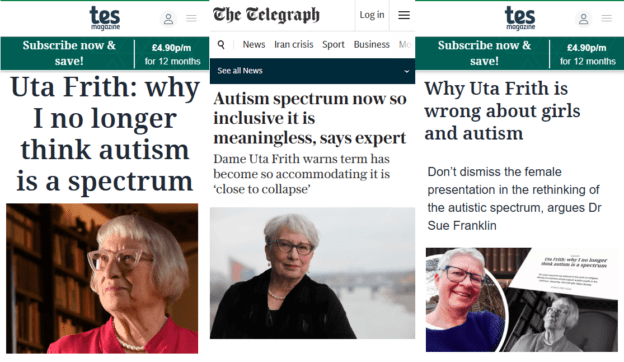
A response to Dame Uta Frith on autism, diagnosis, and the limits of the spectrum. Dame Uta Frith’s claim that the autism spectrum is “close to collapse” reflects a real tension in modern diagnosis. This article argues that the issue is not over-inclusion, but diagnostic flattening following the DSM-5 consolidation of distinct profiles into a single category. Drawing on a broader series of work, it reframes the problem as structural, shaped by simplification, usefulness, and misalignment between cognitive diversity and fixed systems.

Continue reading

Asperger’s Syndrome and the Question of Usefulness

Part 1 of a seven-part series examining how societies understand neurodivergent minds through the lens of usefulness. The uneasy history of a diagnosis born in Nazi-era Vienna. Hans Asperger first described a group of intellectually capable but socially atypical children in Nazi-era Vienna. Later research has shown his work occurred within a medical system shaped by eugenics and the classification of human usefulness. This article examines the difficult history of the Asperger’s diagnosis, the children it helped protect, those it did not, and the lasting implications for how autism is understood today.

Continue reading

Exploring the Interplay, Similarities, and Differences between Autism, Asperger Syndrome, and ADHD, Comparing Them to Neurotypicality: A Comprehensive Analysis

This article explores the nuanced interplay between Autism Spectrum Disorder (ASD), Asperger Syndrome, and Attention Deficit Hyperactivity Disorder (ADHD), comparing their shared traits, differences, and their contrasts with neurotypicality. It delves into the unique challenges faced by neurodivergent individuals, including the pressure to conform to neurotypical norms, such as reading facial expressions, which can feel unnatural and burdensome. The article highlights key similarities, such as sensory sensitivities and executive functioning challenges, while distinguishing between hyperfocus in ADHD and intense interest in Asperger’s, emphasising the role of above-average intelligence in the latter. By focusing on strengths and fostering inclusivity, it advocates for greater understanding and tailored support for neurodivergent individuals.

Continue reading