Tag Archives: usefulness

And This Is Sid: Witness as Co-Authorship

Call Me Womble said I am the baker, and my life is the bread. Then Ian pointed out the obvious problem: there are other people in the bakery. This is an essay about my friend Dave, who stole my stories, helped produce them, blamed me when he died, and kept editing afterwards. Personality happens between people. Being seen is not a passive event. Usefulness asks what I can do for you; witness asks whether I am here. We make one another. We do not own one another.

Continue reading

Choose to Build Your Own Meaning Anyway: Beyond the Question of Usefulness

Part 7 of a seven-part series examining neurodivergence through the lens of usefulness. This article moves beyond analysis to response, arguing that when systems fail to produce belonging or meaning, the only viable path is to construct meaning deliberately. Drawing on lived experience, philosophy, and practice, it explores how to continue without resolution by building something that matters, rather than being defined solely by usefulness.

Continue reading

When Autism Doesn’t Work: The Human Cost of the Question of Usefulness

Part 6 of a seven-part series exploring how neurodivergent minds are understood through the lens of usefulness. The previous articles examined this question from historical, economic, diagnostic, and structural perspectives. This article takes a different approach. It describes what that dynamic feels like from the inside when it does not work.

Continue reading

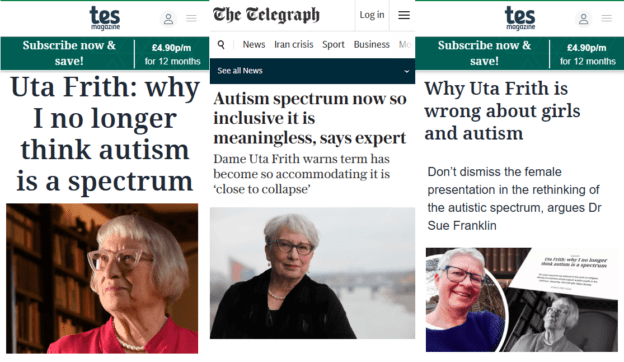
The Spectrum Didn’t Collapse. It Was Flattened. A Response to the Uta Frith Autism Debate.

A response to Dame Uta Frith on autism, diagnosis, and the limits of the spectrum. Dame Uta Frith’s claim that the autism spectrum is “close to collapse” reflects a real tension in modern diagnosis. This article argues that the issue is not over-inclusion, but diagnostic flattening following the DSM-5 consolidation of distinct profiles into a single category. Drawing on a broader series of work, it reframes the problem as structural, shaped by simplification, usefulness, and misalignment between cognitive diversity and fixed systems.

Continue reading