Tag Archives: autism spectrum

We Still Don’t Understand Neurodivergent Minds Even Beyond the Question of Usefulness

Part 5 of a seven-part series exploring how neurodivergent minds are understood through the lens of usefulness. This article brings together the perspectives developed across the series to examine how that framing persists beneath more positive language in modern thinking, and argues that moving beyond it requires changing the environments we build rather than continuing to sort, adapt, or reshape different kinds of minds.

Continue reading

The Spectrum Problem after The Question of Usefulness

Part 4 of a seven-part series asking whether the modern autism spectrum accurately describes the diversity of neurodivergent cognition. Has diagnostic simplification obscured meaningful neurological differences? Autism is now defined as a single spectrum in modern psychiatric manuals, replacing earlier distinctions such as Asperger’s syndrome. While this simplified diagnosis, it also collapsed multiple neurological profiles into one category. This article examines whether the spectrum model accurately reflects autistic diversity or obscures meaningful differences in cognition, support needs, and lived experience.

Continue reading

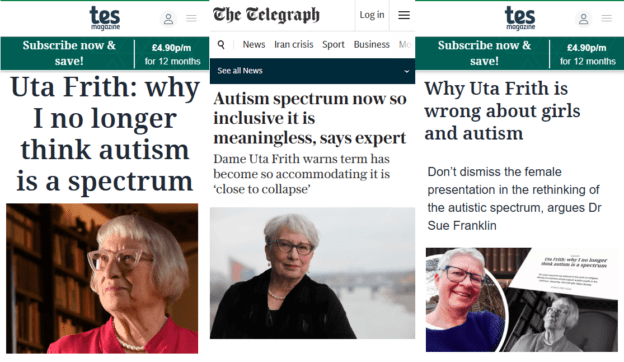
The Spectrum Didn’t Collapse. It Was Flattened. A Response to the Uta Frith Autism Debate.

A response to Dame Uta Frith on autism, diagnosis, and the limits of the spectrum. Dame Uta Frith’s claim that the autism spectrum is “close to collapse” reflects a real tension in modern diagnosis. This article argues that the issue is not over-inclusion, but diagnostic flattening following the DSM-5 consolidation of distinct profiles into a single category. Drawing on a broader series of work, it reframes the problem as structural, shaped by simplification, usefulness, and misalignment between cognitive diversity and fixed systems.

Continue reading

Asperger’s Syndrome and the Skepticism towards Social Science: A Personal Perspective

From the outside looking in, the world of social science – particularly concepts like personality types – can appear fascinating and revelatory. However, for many individuals with Asperger’s Syndrome (part of the broader autism spectrum), these structures can sometimes feel like contrived categorizations. This isn’t to say that all those with Asperger’s share this sentiment, but a segment does find it challenging to relate to these constructs. Let’s delve into why, using myself as a template and lens.

Continue reading

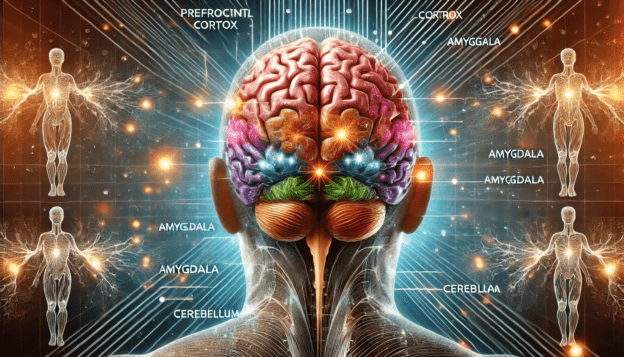
Understanding Neural Differences in Asperger’s Syndrome

Asperger’s Syndrome, currently part of the Autism Spectrum, according to the DSM5, does not involve missing neurons but reflects differences in neural structure and connectivity. This article explores key brain regions and neural systems affected, such as the prefrontal cortex, amygdala, and mirror neuron system, highlighting their roles in social behaviour, sensory processing, and emotional regulation.

Continue reading