Tag Archives: cognitive diversity

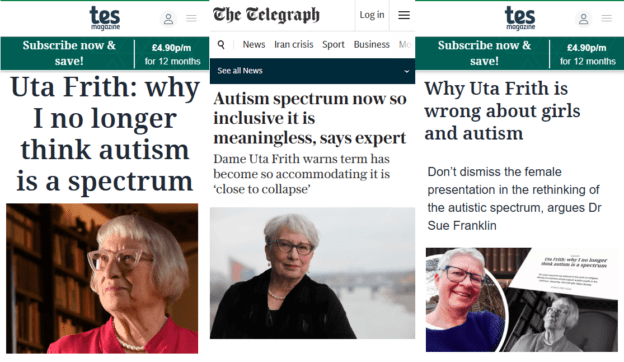
The Spectrum Didn’t Collapse. It Was Flattened. A Response to the Uta Frith Autism Debate.

A response to Dame Uta Frith on autism, diagnosis, and the limits of the spectrum. Dame Uta Frith’s claim that the autism spectrum is “close to collapse” reflects a real tension in modern diagnosis. This article argues that the issue is not over-inclusion, but diagnostic flattening following the DSM-5 consolidation of distinct profiles into a single category. Drawing on a broader series of work, it reframes the problem as structural, shaped by simplification, usefulness, and misalignment between cognitive diversity and fixed systems.

Continue reading

Understanding the Social Model of Disability in the Context of Neurodiversity

The social model of disability is a progressive and empowering framework that shifts the focus from an individual’s impairments to the systemic, societal, and environmental barriers that hinder their full participation. This model contrasts with the traditional medical model, which tends to define individuals by their conditions and frames their differences as problems to be fixed. For neurodiverse individuals, including those with autism, Asperger’s syndrome, ADHD, and conditions from the Dys family (dyslexia, dyspraxia, dyscalculia, etc.), the social model offers a perspective that celebrates diversity and prioritizes inclusivity.

Continue reading