Tag Archives: Automation

Hard-Wired Wetware IV: The Case Against Rebalancing: Why The Asymmetrical Integration Model (AIM) May Be Self-Correcting

This paper interrogates the normative extension of the Asymmetric Integration Model by examining whether asymmetrical integration may represent a dynamically stabilised equilibrium rather than a structural failure. It explores market feedback, legitimacy constraints, optimisation adaptation, and functional specialisation as endogenous corrective mechanisms, arguing that asymmetry may be constrained by competitive and economic forces rather than requiring deliberate architectural rebalancing.

Continue reading

Hard-Wired Wetware III: Rebalancing The Asymmetric Integration Model (AIM)

This paper introduces the Asymmetric Integration Model (AIM), arguing that in post-LLM digital environments, automation generates conversational scale while humans supply consequence-bearing legitimacy. As optimisation regimes prioritise engagement density and persistence, affective cost is distributed to participants while control remains centralised. The proposed framework shifts debate from content moderation to architectural design, outlining pathways to rebalance asymmetry without rejecting human–machine integration.

Continue reading

Hard-Wired Wetware II: the Post-LLM Web Asymmetric Integration Model (AIM) Defined

The post-LLM web is not replacing humans with machines. It is integrating humans into machine-generated scale. This paper formalises the Asymmetric Integration Model (AIM), arguing that as synthetic systems produce abundant conversational substrate, human participants supply the scarce resource of consequence-bearing legitimacy. Contemporary platforms are shifting from attention extraction toward asymmetrical affective integration.

Continue reading

Hard-Wired Wetware I: From Attention Extraction to Human Integration

As automation surpasses human traffic and synthetic actors permeate public, semi-private, and gaming ecosystems, the web is reorganising around a new extraction layer. Large language models collapse the cost of human emulation, shifting platforms from attention capture to human integration. The next phase of the internet does not replace people with machines. It recruits them as psychological infrastructure: wetware that supplies legitimacy, empathy, and consequence to autonomous systems.

Continue reading

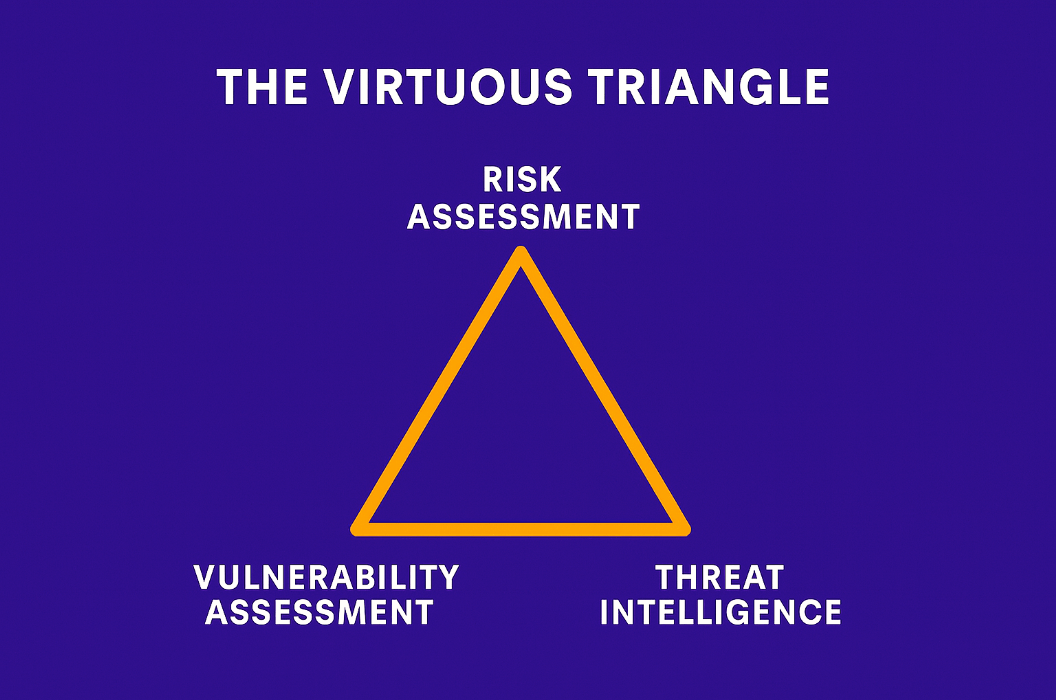
The Virtuous Triangle: Rethinking Risk at Scale

This article introduces the Virtuous Triangle as a strategic framework for understanding cyber risk through the combined lenses of vulnerability assessment, threat intelligence, and contextual risk analysis. It argues that meaningful risk assessment only emerges when these components are integrated and automated at scale. Drawing on decades of experience, the piece reflects on the limitations of standalone data and the necessity of systems thinking in cybersecurity.

Continue reading

Let’s Encrypt, But Let’s Not Regret: Linode CLI Updates Keep Breaking Our SSL Renewal Flow

Linode has long been a reliable platform for hosting production infrastructure, but frequent changes to the linode-cli are repeatedly breaking SSL certificate renewals via Let’s Encrypt. This article outlines the operational impact, the frustration, and what Akamai/Linode could do to restore developer trust.

Continue reading