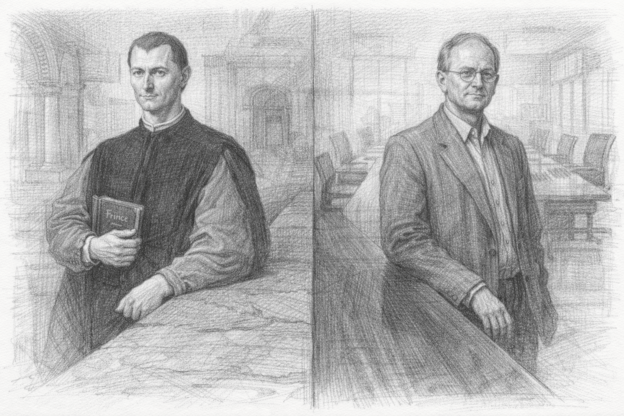
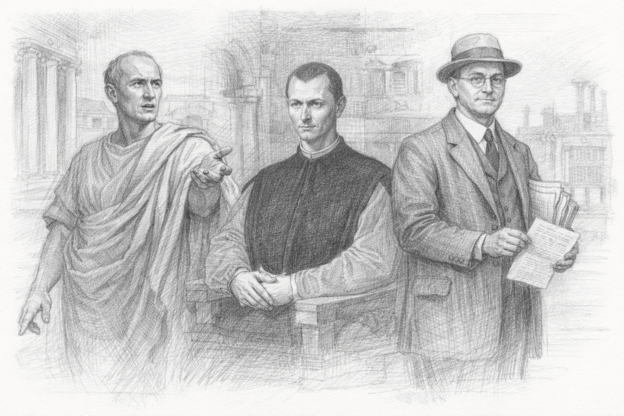
This final essay completes a trilogy on power by asking what remains once its mechanics are fully understood. Building on Pfeffer’s organisational realism and Machiavelli’s historical clarity, it argues that unsanitised descriptions of power do not endorse cruelty but remove the moral alibis that allow harm to persist. By collapsing the distance between action and consequence, such writing makes innocence unavailable and neutrality impossible. The central risk, that truth can be weaponised, is acknowledged, but silence is shown to be more partisan, concentrating power through ignorance rather than constraining it.
Continue reading
Power Without Alibis: What Remains After You Understand How Cruelty Works
Leave a Reply · 09/01/2026 · 1, 1, 6, 98, 98 popular