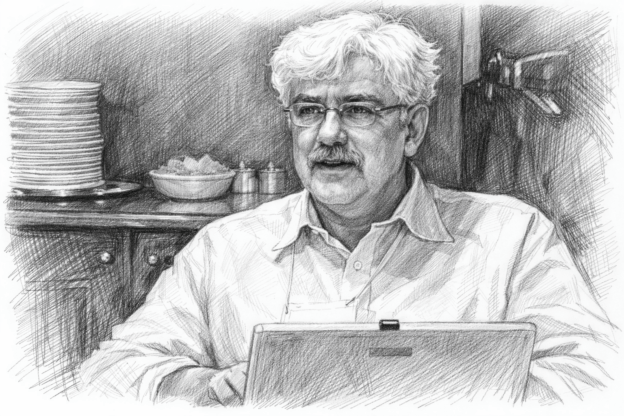
Kim Cameron reshaped how we think about digital identity, placing the individual, not the platform, at the centre of control, consent, and privacy. From the Seven Laws of Identity to user-centric architectures like CardSpace, his influence continues to shape modern debates on decentralised identity, data ownership, and autonomy. This article reflects on his legacy, his humanity, and why his vision matters more than ever.
Contents
- Contents
- 1. Introduction
- 2. Remembering Kim Cameron
- 3. A life spent building the “identity layer” of the internet
- 4. Identity with purpose: people, not accounts
- 5. The Seven Laws of Identity: a human-first framework
- 6. The Identity Metasystem: identity as an ecosystem, not a silo
- 7. CardSpace and the “identity selector”: making the user an active participant
- 8. “Owning” identity: from accounts to agency
- 9. Identity in practice: lessons from the Government Gateway
- 10. Kim’s vision in today’s digital world
- 11. Enduring lessons for identity today
- 12. Conclusion: A legacy of ideas that endure
1. Introduction
Kim Cameron is one of those rare technologists whose work didn’t just ship products, it helped change how an entire field thinks.
He spent decades wrestling with a deceptively simple question: how do humans safely and privately “exist” online? Not just as usernames and passwords, but as people with many roles, employee, customer, patient, citizen, who need to move between systems without being trapped inside any single one.
2. Remembering Kim Cameron
In the early days of digital identity, when the internet was still learning who we were, few people did as much to shape how identity should work as Kim Cameron. His ideas haven’t just influenced technology, they’ve influenced how we think about identity, privacy, and human agency online.
I only knew Kim anecdotally, I met him a few times, recall having had a coffee with him once in Manchester, but even from the outside, his impact was clear. Friends and colleagues in the identity space spoke about him with genuine warmth and respect. Jerry Fishenden, who served as NTO at Microsoft, clearly held both professional and personal admiration for Kim’s work. Robin Wilton likewise spoke with real esteem for his insights and influence. That sense of human connection behind the professional respect was nice to see, and says something about the kind of person he was.
3. A life spent building the “identity layer” of the internet
Cameron was a Canadian computer scientist who joined Microsoft in 1999 (via Microsoft’s acquisition of Zoomit, a company he co-founded focused on digital identity). Over time he became Microsoft’s Chief Architect of Identity / Identity and Access Architect, influencing major identity technologies used across enterprises and the web.
Inside Microsoft, his work connected the dots between enterprise directory systems and the wider world of online identity, helping shape the evolution and adoption of things like Active Directory and later identity approaches that bridged on-premises and cloud.
But his most enduring impact wasn’t a single product. It was a set of ideas.
4. Identity with purpose: people, not accounts
Kim’s legacy isn’t only technical, it’s philosophical. At a time when many in the industry saw identity as strings of usernames and passwords, Kim asked a deeper question: what should identity be for the person behind the screen? His answer was radical then and remains urgent now: the user should control and own their identity.
That idea seems obvious today, but it wasn’t always. Kim articulated this view in his Seven Laws of Identity, a human-centered set of principles emphasizing consent, minimal disclosure, context, and pluralism. These laws helped set the foundation for thinking about identity as something user-centric rather than system-centric, a shift that still influences identity management and privacy work today.
5. The Seven Laws of Identity: a human-first framework
In 2005, Cameron published “The Laws of Identity”: seven principles describing what identity systems must do to work in the real world, meaning, work for humans, not just databases.
The Laws include themes that still feel modern because they’re grounded in lived reality:
- User control and consent — identity works best when the person participates and agrees, not when identity is silently inferred or imposed.
- Minimum disclosure for a constrained use — don’t overshare; reveal only what’s needed for the transaction.
- Justifiable parties — information should only be shared with parties that have a necessary and justifiable place in the identity relationship.
- Directed identity — support both public identifiers where appropriate and private context-specific identifiers to protect privacy.
- Pluralism of operators and technologies — no single vendor or “one true” identity provider; identity must work across a diverse ecosystem.
- Human integration — the system must make sense to humans so they can spot danger and make informed choices.
- Consistent experience across contexts — users should have a simple, consistent experience while supporting separation of contexts where needed.
Taken together, these seven laws were not just academic, they were intended as architectural principles grounding identity systems in human reality. When Kim first published them in 2005, they offered a way to think systematically about what an “identity layer” for the internet would require: user agency, context-aware interactions, privacy by design, interoperability across systems, and a consistent experience for people rather than systems.
Nearly two decades on, that framing still holds up remarkably well. Modern identity work, from verifiable credentials and digital wallets to privacy regulations like GDPR and decentralized identity specs from W3C, reflects many of these same concerns: limiting disclosure, ensuring consent, avoiding centralised gatekeepers, and creating user-centric flows rather than organisation-centric ones. In this sense, the Seven Laws remain a foundational lens for evaluating both legacy and emerging identity systems.
If you’ve ever argued that privacy can’t be a bolt-on, that it has to be architectural, you’re speaking a language Cameron helped popularize.
6. The Identity Metasystem: identity as an ecosystem, not a silo
Cameron’s big conceptual leap was to describe identity not as “one login” but as an identity metasystem: a layer that lets many identity systems interoperate without forcing everyone into a single authority. Microsoft Research’s design rationale for this approach explicitly ties the metasystem architecture back to the Laws of Identity.
This was an important pivot away from the era’s “one account to rule them all” thinking. It was also, quietly, a values statement: the internet shouldn’t require a single gatekeeper for personhood.
7. CardSpace and the “identity selector”: making the user an active participant
The most visible attempt to embody these ideas in software was Windows CardSpace (part of Microsoft’s “InfoCard” effort). It introduced an “identity selector” experience, the idea that the user chooses which identity to present, in a way that’s understandable and repeatable.
CardSpace didn’t become the universal identity layer many hoped for, but it left a deep mark on the field: it made UX, consent, and disclosure part of the identity conversation, not an afterthought.
8. “Owning” identity: from accounts to agency
When people talk about the user/person/citizen “owning” their identity, Cameron’s influence is all over the framing, even when his name isn’t mentioned.
He didn’t mean “identity” in the simplistic sense of a profile page you can edit. He pushed for something more radical and practical:
- You should be able to use different identifiers in different contexts (so one relationship doesn’t automatically reveal another).
- You should be able to prove claims without handing over raw data (“I’m over 18” without giving a full birthdate; “I’m a licensed professional” without exposing everything else).
- No single organization should be able to unilaterally define or revoke your entire online existence (because identity is bigger than any one service).
That philosophy connects directly to later movements like user-centric identity, and it also maps cleanly onto what would eventually be called decentralized identity / self-sovereign identity, where credentials can be issued by authoritative parties but held and presented by the individual. (Even late in his Microsoft tenure, commentators noted his role in helping the company move toward supporting decentralized identity approaches).
To see how these principles played out beyond theory, they resonated closely with real-world discussions I was immersed in at the time.
9. Identity in practice: lessons from the Government Gateway
Back when I worked on the Government Gateway, handling security policy alongside my friend and colleague Dave Walker, the challenges of real-world identity were front and center. We were grappling with the same fundamental questions Kim was asking: how do you authenticate and authorize users in a way that’s secure and respectful of privacy? How do you help systems trust users without forcing users to give up control of their lives online?
An extension of that initial work involved integrating Sun’s identity stack of the day, both Sun Identity Manager (provisioning and lifecycle management) and OpenSSO (access management / federation), as part of the identity and access foundations supporting the UK Government Gateway. In other words, this wasn’t abstract theory: it was British public-sector infrastructure built on serious, enterprise-grade identity technology. After Oracle acquired Sun in January 2010, Sun Identity Manager continued as Oracle Waveset (with Oracle positioning Oracle Identity Manager as the strategic successor and encouraging migration), while OpenSSO’s lineage lived on through ForgeRock, which was founded by former Sun engineers to continue support and development, renaming OpenSSO to OpenAM. Looking back, it’s hard not to see how closely these real-world systems echoed the questions Kim Cameron kept returning to: trust that scales, privacy that holds up, and identity that ultimately serves the person rather than the platform.
The team working on that integration went on to win an award, and while many people contributed to the delivery, I’m proud to have played a part at the architectural level, helping shape some of the early identity thought leadership and high-level integration approach that supported the Government Gateway’s direction.
10. Kim’s vision in today’s digital world
Thinking about identity as something people truly control isn’t just a niche technical concern anymore, it’s become a cornerstone of digital freedom.
Movements like Solid (Social Linked Data), championed by Tim Berners-Lee, echo similar ideas: that individuals should hold and control their own data in personal “pods” rather than surrendering it to platforms. This approach lives in the same philosophical lineage as Kim’s user-centric identity, putting people, not corporate systems, at the heart of control.
That’s deeply connected to freedom of expression, privacy, and self-determination. When people can control how their identity and data travel online, they can choose how they present themselves, where they engage, and whose systems they trust, a fundamental aspect of autonomy in the digital age.
There has arguably never been a more important time for Kim’s vision. From concerns about surveillance and data exploitation to calls for decentralised and privacy-preserving identity systems, the core idea, that identity belongs to the person first, is more relevant than ever.
11. Enduring lessons for identity today
Modern identity conversations, digital wallets, verifiable credentials, privacy-preserving verification, anti-phishing auth, interoperability across public and private sectors, still orbit the problems Cameron articulated early:
- Identity is always contextual.
- Security without usable human control fails in practice.
- Privacy isn’t “hide everything,” it’s “disclose appropriately.”
- Ecosystems outlast platforms.
Kim Cameron passed away in 2021, and yet his thinking continues to show up everywhere people are trying to build identity systems that respect human beings as more than login events.
12. Conclusion: A legacy of ideas that endure
Kim Cameron’s influence stretches far beyond one company or product. His work helped the identity community shift its frame from “accounts and credentials” to people with rights, context, and agency. That’s a legacy that continues to inform modern identity standards, privacy frameworks, and emerging technologies that aim to put individuals back in control of their digital lives.
It’s been a privilege to witness, in my small way, the community that grew around these ideas. And while I didn’t know Kim personally the way some did, his impact, and the respect people had for him, makes it clear that his work helped steer identity toward a more humane, thoughtful future.