Tag Archives: AI Security

CYBERUK 2026: From Policy to Practice and the System Inbetween

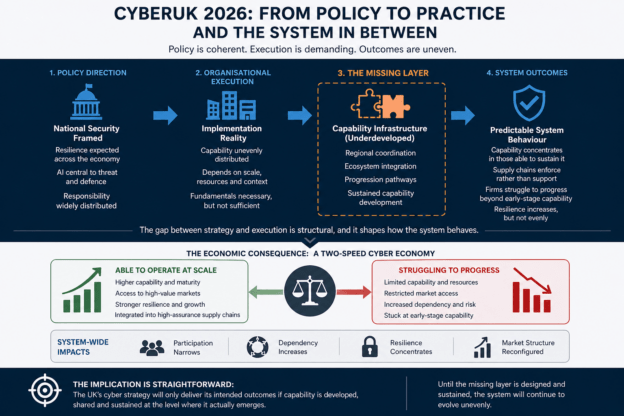
CYBERUK 2026 signals a shift from building a cyber ecosystem to operating a national cyber system. Across a series of analyses, a consistent pattern emerges: policy is coherent, execution is demanding, and outcomes are uneven. This article draws those strands together to show that the gap between strategy and delivery is not incidental; it is structural, and it defines how the system behaves.

Continue reading

CYBERUK 2026: System Ambition vs Operational Reality and the Rise of a Two-Speed Cyber Economy

CYBERUK 2026 reveals a coherent but challenging shift in UK cyber strategy: from building a policy ecosystem to operating a national cyber system. While the government drives system-level resilience and AI-enabled defence, organisations are expected to execute fundamentals under increasing pressure. The result is a growing gap between ambition and capability, driving the emergence of a two-speed cyber economy where cyber security becomes a condition of market access.

Continue reading

CYBERUK 2026: The Perfect Storm and the Limits of Fundamentals

Richard Horne’s CYBERUK 2026 keynote frames cyber security as operating in a “perfect storm” of rapid technological change and rising geopolitical tension. While reinforcing the importance of fundamentals, the speech highlights how AI and evolving threats are reshaping the landscape. The core challenge is whether organisations can maintain baseline security as capability gaps widen, raising the risk of a two-speed cyber economy.

Continue reading

CYBERUK 2026: From Policy Ecosystem to Operational Doctrine

The UK’s Security Minister, Dan Jarvis MBE’s CYBERUK 2026 speech, signals a shift from building a cyber ecosystem to actively operating a national cyber system. It elevates baseline security expectations, embeds supply chain enforcement, and positions AI as central to defence. However, this transition risks concentrating market power, potentially excluding SMEs while increasing dependence on a small number of large firms and frontier AI providers.

Continue reading

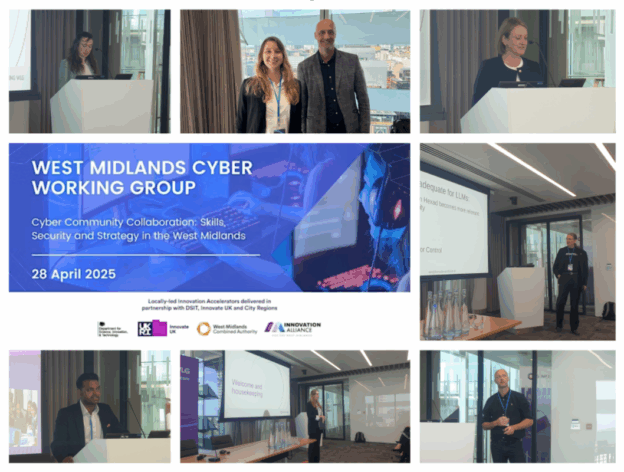
Cyber Collaboration in the West Midlands: Skills, Strategy, and a Shared Future

On 29 April 2025, the West Midlands Cyber Working Group met at Gowling WLG in Birmingham to explore how collaboration can drive cyber resilience, skills development, and strategic growth across the region. Speakers, including Andy Hague (TechWM), Dan Rodrigues (CyberFirst), Dave Walker (ex-AWS), Sarah Gray and Louise Macdonald (Gowling WLG), and Wayne Horkan (WM CWG Chair) shared insights on scaling regional leadership, building inclusive talent pipelines, addressing AI security risks, and navigating evolving legal frameworks. The event underscored a shared ambition to position the West Midlands not just as a participant but as a leader in the UK’s cyber ecosystem.

Continue reading

Cyber Is New: Why We’re Just Getting Started… Emerging Trends and Future Directions

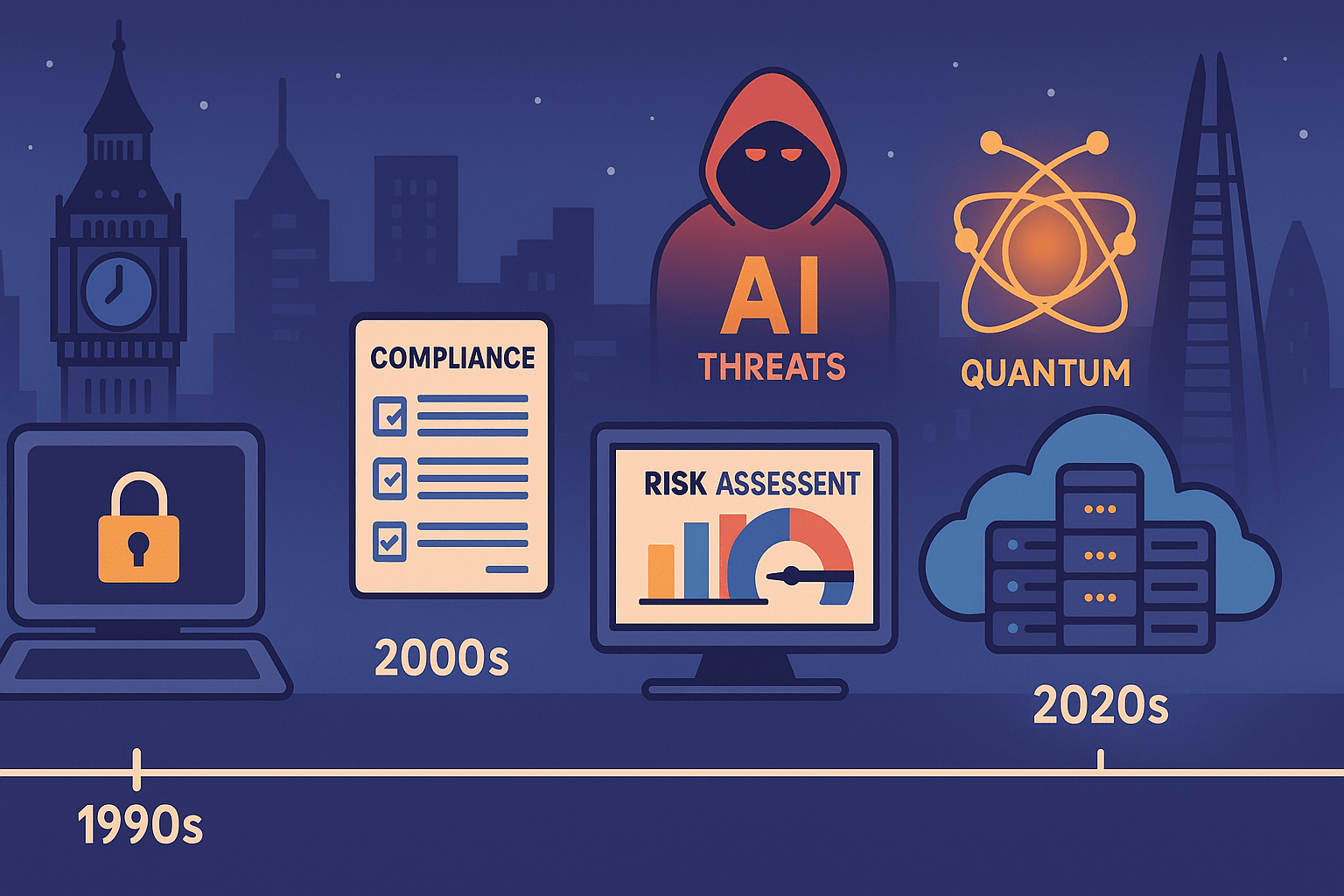
Cybersecurity feels foundational today, but as a discipline, it is startlingly young. This article argues that cyber is still in its infancy, especially when compared to IT or financial governance, and outlines why this newness matters. From AI security and quantum disruption to the structural challenges facing certification, education, and regulation, the piece maps both future directions and the underlying trends shaping the field. In a world where cyber is everywhere, this article insists: we’re just getting started.

Continue reading

The Ides of March: Reflections on Cyber, Startups, and Scaling Innovation

The Ides of March is a fitting time to reflect on betrayal, resilience, and the realities of UK cybersecurity. In the past two weeks, I’ve balanced DSIT’s Cyber Local funding process, chaired the West Midlands Cyber Working Group (WM CWG), led two funding bids, scaled one startup in a brutal funding climate, and booted up a second from scratch. Along the way, I’ve won the Pitch Battle at Cyber Runway Live, launched the UK’s first dedicated universal cyber risk score and comparison site, and tackled everything from weaponised AI threats to Kafka-powered scalability, all while navigating the messy, unpredictable, and often painful journey of building something that lasts.

Continue reading