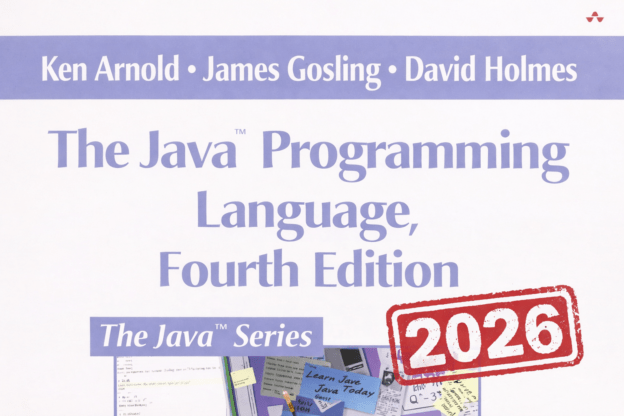
Java is still widely taught in universities, but far less commonly chosen for new work in practice. This article reframes the question “Should I learn Java?” as a problem of context, career intent, and developer productivity, drawing on real-world demand rather than syllabus inertia.
Contents
- Contents
- 1. Introduction: A Conversation About Languages, Careers, and Context
- 2. Java in Practice, Not Theory
- 3. Language Choice Is a Career Question
- 4. Productivity Beats Fashion
- 5. AI Lowers Friction, Not Organisational Reality
- 6. If You Do Need to Learn Java
- 7. “Vibe Coding” Still Depends on Context
- 8. Conclusion: The Real Lesson
- 9. References and Further Reading
1. Introduction: A Conversation About Languages, Careers, and Context
I was recently asked for advice by a student learning Java as part of a university module. The question was simple and familiar:
Do you know of any good resources to learn Java? The course feels very tailored to the coursework, and I want to make sure I really understand the language.
It’s a reasonable concern — but it’s also the wrong starting point.
The more important question isn’t how to learn Java. It’s why you’re learning it at all.
2. Java in Practice, Not Theory
It’s been years since I learned Java, and even longer since I actively chose it. That isn’t a matter of taste. It’s a matter of demand.
I’m no longer asked to build new systems in Java. The last time I was paid to touch it was to maintain — or more accurately, decommission — a large legacy Java estate that hadn’t seen meaningful feature development in over a decade.
That doesn’t mean Java is “dead”. It means it occupies a specific niche:
- large, established organisations
- long-lived enterprise systems
- maintenance-heavy environments
- risk-averse delivery cultures
This doesn’t mean Java is only used for legacy systems — new development continues in large enterprises, finance, and cloud-native backends — but it tends to occur in organisations that value stability, scale, and governance over rapid iteration.
If that’s the world you’re aiming for, Java remains relevant. If it isn’t, you should be honest about that early.
3. Language Choice Is a Career Question
When someone asks whether they should invest time learning Java outside lectures, my answer is usually another question:
What are you planning to work on?
Broadly speaking:
- Maintaining large, legacy systems?
Java is still common. - Building Microsoft-centric enterprise applications?
.NET / C# remains dominant. - Web applications in fast-moving teams?
JavaScript ecosystems (Node, React) are far more typical. - Mobile development?
Kotlin (Android) or Swift (iOS). - Small teams, greenfield products, high developer autonomy?
Ruby on Rails, Python, or similar high-productivity stacks.
Language choice follows organisational culture more than technical merit.
4. Productivity Beats Fashion
Personally, I gravitate toward tools that maximise individual developer effectiveness. Ruby on Rails still embodies a belief that a single competent developer can build and evolve a full application without ceremony.
That philosophy matters more than syntax.
Java, by contrast, tends to thrive in environments optimised for scale, governance, and predictability rather than speed or experimentation. Neither approach is morally superior — but confusing them leads to frustration.
5. AI Lowers Friction, Not Organisational Reality
AI-assisted tools make learning and using any language easier. Syntax, boilerplate, and even idiomatic patterns are no longer major barriers. That’s useful — but it doesn’t change where languages tend to be used or why organisations choose them.
Java still thrives in environments shaped by governance, risk management, and long-lived systems. AI may reduce effort within those constraints, but it doesn’t remove them. If anything, it sharpens the difference between high-autonomy teams and tightly controlled ones.
6. If You Do Need to Learn Java
If Java is required for your course or target role, then yes — learn it properly. Focus on:
- understanding the language model and standard library
- object-oriented design done well (not cargo-cult patterns)
- reading existing codebases, not just writing toy examples
Treat it as learning how certain organisations think, not just how a compiler works.
7. “Vibe Coding” Still Depends on Context
The idea that language choice matters less because AI can generate code misses an important point. So-called “vibe coding” works best where feedback is fast, mistakes are cheap, and developers are trusted to change things end-to-end.
Those conditions are cultural, not technical. Learning Java with AI support is easier than ever, but working effectively in Java-heavy organisations still means understanding how decisions are justified, reviewed, and owned.
8. Conclusion: The Real Lesson
Universities often teach Java because it’s stable, assessable, and familiar — not because it reflects how most new systems are built in 2026.
That gap isn’t a failure. But students should be made aware of it.
Learning a language is never wasted effort. But learning why a language exists where it does is what turns education into judgement.
9. References and Further Reading
9.1 Books
- “Effective Java” by Joshua Bloch: This book is great for understanding best practices and advanced concepts. Find it on Amazon
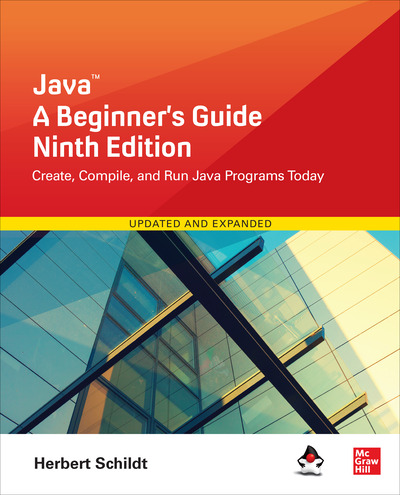
- “Java: A Beginner’s Guide” by Herbert Schildt: An excellent starting point for beginners. Available on McGraw Hill and O’Reilly
- “Head First Java” by Kathy Sierra and Bert Bates: Known for its engaging and interactive approach. Available here
- “Java: The Complete Reference” by Herbert Schildt: A comprehensive guide, useful as a reference. Find it here
- “Core Java Volume I & II” by Cay S. Horstmann: Offers in-depth coverage of Java fundamentals. Available on Amazon
9.2 Online Courses
- Coursera: “Java Programming and Software Engineering Fundamentals” by Duke University. Coursera Java Programming
- Udemy: Courses like “Java Programming Masterclass for Software Developers” by Tim Buchalka. Udemy Java Programming Masterclass
- Codecademy: Interactive Java programming course. Codecademy Java Course
- edX: “Learn to Program in Java” by Microsoft. edX Java Course
- Pluralsight: Offers a variety of Java courses for different skill levels. Pluralsight Java Courses
9.3 Interactive Tutorials
- Codecademy: Offers interactive lessons for beginners. Codecademy Java
- JetBrains Academy (Hyperskill): Provides project-based learning. JetBrains Academy Java
- CodingBat: Good for practicing coding problems in Java. CodingBat Java
- LeetCode: Ideal for practicing more complex algorithmic problems. LeetCode Java
9.4 Video Lectures and YouTube Channels
- TheNewBoston: Popular for beginners. TheNewBoston YouTube
- Derek Banas: Known for his concise tutorials. Derek Banas YouTube
- Java Brains: Offers in-depth tutorials on various Java topics. Java Brains YouTube
9.5 Online Documentation and Communities
- Oracle Java Documentation: Official documentation for reference. Java Documentation
- Stack Overflow: For asking questions and finding answers. Stack Overflow Java
- GitHub: Explore Java projects and contribute to open-source. GitHub Java
- Java Subreddit: A community for discussion and news. Java Subreddit
9.6 Practice and Project Ideas
- GitHub: Explore beginner-friendly Java projects. GitHub Java Projects
- Hackerrank and LeetCode: Practice Java coding problems. Hackerrank Java and LeetCode Java
- Build simple applications: Like a calculator, to-do list, or a basic game.
9.7 Miscellaneous
- Official Oracle Java Tutorials: Good for understanding core concepts directly from the source. Oracle Java Tutorials
- Javadoc: Learn to read and understand Java documentation.