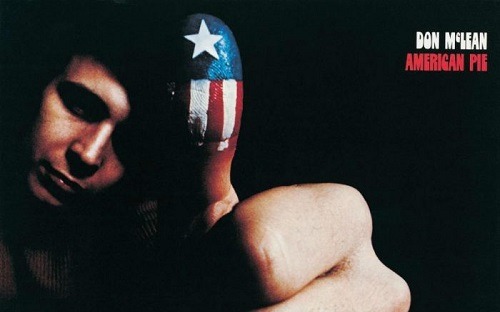
A meditation on American Pie as cultural myth rather than pop nostalgia. From Buddy Holly’s death to Altamont, from Elvis to Dylan, from Trinity to dry levee, the song encodes a cycle older than rock and older than Christianity itself: birth, death, return. The music did not die; innocence did. And every lament is the seed of renewal.
Contents
- Contents
- 1. Introduction
- 2. The First Death
- 3. The Passing of the Crown
- 4. Heat, Fire, and Disorder
- 5. Altamont: The Revelation
- 6. The Trinity Departs
- 7. The Dry Levee
- 8. The Celtic Turn
- 9. Is the Music Dead?
- 10. The Myth Beneath the History
- 11. Conclusion: The Koan of Return
- 12. Appendix – Extended Analysis
- 12.1 Part I: Complete Table of Imagery, Songs, Figures, and Events
- 12.2 Part II: Contested Items
- 12.2.1 “The Jester”
- 12.2.2 “The King”
- 12.2.3 Borrowed “coat” / James Dean imagery
- 12.2.4 “The Book of Love”
- 12.2.5 “Do you have faith in God above?”
- 12.2.6 “The court was adjourned / no verdict was returned”
- 12.2.7 “The quartet practiced in the park”
- 12.2.8 “Helter skelter”
- 12.2.9 “The birds” / “Eight miles high”
- 12.2.10 “It landed foul on the grass”
- 12.2.11 “Jack Flash”
- 12.2.12 Fire / Devil language
- 12.2.13 Altamont: “players,” “marching band,” “angels”
- 12.2.14 “The marching band refused to yield”
- 12.2.15 “The three men I admire most”
- 12.2.16 “Caught the last train for the coast”
- 12.2.17 The dry levee
- 12.2.18 “Good ol’ boys drinking whiskey and rye”
- 12.2.19 “This’ll be the day that I die”
- 12.2.20 What exactly “the day the music died” refers to
- 12.2.21 Whether the song is ultimately pessimistic
- 12.2.22 Whether it’s history or mythology
- 12.3 Part III: The Christian Overview Mapped to Part I
1. Introduction
There are songs you learn. And some songs were already inside you. I don’t remember a time before Bye, bye, Miss American Pie. It feels less like something I heard and more like something I inherited. Like prayer. Like myth. Like a tide that was already moving before I knew the sea.
And that’s the thing about this song. It isn’t just about 1959. It isn’t just about the 1960s.
It isn’t even just about music.
It is about the pattern. Birth. Death. Return. Turn, turn, turn.
This is not the first time I’ve written about cycles. The koans series returns to them because they are the pattern that endures: inheritance, fracture, continuity, memory. Civilisations lose what they love. They mourn it. They tell the story. And in the telling, the story becomes seed. This song is not an exception. It is another turn of the wheel.
1.1 How It All Fits Together
The song traces a 10-year arc:
- 1959 — Loss of innocence (Buddy Holly).
- Early 60s — A new voice rises (Dylan).
- Mid 60s — Psychedelia, drugs, political unrest.
- Late 60s — Violence enters the movement (Manson, Altamont).
- End of 60s — Idealism collapses.
McLean uses baseball, marching bands, jesters, kings, and biblical imagery to turn rock history into American myth. The key structure is cyclical:
- The first “day the music died” is literal.
- The later ones are symbolic.
- Each repetition marks deeper cultural disillusionment.
By the end, “music” doesn’t just mean rock ’n’ roll. It means America’s sense of harmony with itself.
2. The First Death
February 3rd, 1959. Buddy Holly. Ritchie Valens. The Big Bopper. A plane falls from the sky and three young musicians die. Don McLean names it simply: the day the music died.
For a thirteen-year-old boy delivering newspapers, it felt like the end of something sacred. Not just artists lost, but innocence ruptured. A communal sound suddenly mortal.
That is the first layer. But the song does not stop there. It keeps turning.
3. The Passing of the Crown
Early rock had a king: Elvis. Then comes the jester — widely read as Bob Dylan — irreverent, prophetic, unsettling. Borrowed rebel aesthetics. A voice “from you and me.”
Rock shifts from hips and rhythm to conscience and protest. This is not decay yet. It is transformation. The old order gives way to a new voice. The myth continues.
4. Heat, Fire, and Disorder
The mid-1960s thicken. Psychedelia. Cold War dread. Helter skelter summers.
Music that stretches the mind — and sometimes fractures it.
The Byrds. The Beatles. The Rolling Stones. Some hear Charles Manson echoing in the background of certain lines. Some hear only the wider cultural fever.
Either way, innocence no longer stands untouched. The music is louder. Darker. More self-aware. And self-awareness always feels like loss at first.
5. Altamont: The Revelation
Then comes 1969. The Rolling Stones take the stage at Altamont. The Hells Angels act as security. A man is killed in front of the stage.
Woodstock had felt like transcendence. Altamont felt like exposure. This is where many believe the song’s central question points: What was revealed? That music was not salvation. That unity was fragile. That the counterculture had shadows.
This becomes the second death. Not the death of musicians. The death of illusion.
6. The Trinity Departs
Later verses speak of three men admired most. Many interpret them as JFK, RFK, and MLK: assassinated within a brutal five-year span. Others read it more symbolically: Father, Son, Holy Ghost, divine authority departing a fractured nation.
McLean never locked the meaning down entirely. That ambiguity is deliberate. Because this is not journalism. It is myth.
7. The Dry Levee
And then the refrain. Driving to the levee. Finding it dry. Good old boys drinking whiskey and rye. Singing about the day they die.
That image has lived inside me for as long as I can remember. The levee should hold water. Water is life. Renewal. Baptism. A dry levee is spiritual drought.
The good old boys aren’t fighting or rebelling. They’re drinking. Resigned. Grim inevitability. The refrain never resolves. It just returns. Like lament in a cathedral. Like keening in an Irish field.
8. The Celtic Turn
Before we were Christians, my ancestors were something else. Celts. Bound to land and season and turning wheel. Birth. Death. Return.
We’ve been Christians a very long time now: fifteen, sixteen hundred years. Longer than many nations have existed in their current form. You don’t just abandon something like that. But Christianity did not erase the turn. It absorbed it.
Ecclesiastes says there is a time to be born and a time to die. The Byrds sang it in another anthem of turning. The cross itself is death and return. The liturgy itself is repetition. The tide goes out. The tide comes back. The levee may be dry, but rivers return.
9. Is the Music Dead?
Here is the koan. If the music truly died, why are we still singing the song? Why does every generation rediscover it? Why do those lines feel like they were always there?
The song is a lament. But it is also proof. Music did not die. Innocence died. Naivety died. Certain myths died. But music transformed.
And transformation, to a young heart, feels indistinguishable from death.
10. The Myth Beneath the History
Strip away the references and you see the deeper architecture: Creation. Fall.
Prophet. Temptation. Violence. Exile.
There is no explicit resurrection scene. But there is something quieter: The story survives. The refrain survives. The song becomes the next generation’s inheritance. The death becomes seed.
11. Conclusion: The Koan of Return
So what was revealed the day the music died? That culture, like life, moves in cycles. That innocence cannot survive unchanged. That every generation believes it has witnessed the end of something sacred.
And that the telling of the end is itself the beginning of the next turn. Birth. Death.
Return. Turn, turn, turn.
The levee will fill again.
11.1 Acknowledgement
This article was written for my Mom, who had this single in her small clutch of singles that she still has, that I remember very well, alongside bangers like Hole in my Shoe and Living in the Past. Thanks for the gift of the love of music, Mom.
12. Appendix – Extended Analysis
McLean himself later described the song as a “morality song” about things “heading in the wrong direction”, and as a “requiem for the kind of life we dreamed in the sixties”, confirming its arc of decline, even if he resisted more elaborate decoding. The analysis below does not attempt to solve a riddle, but rather to examine the deeper patterns the song participates in: patterns of myth, memory, and return.
Broken into three sections:
- Part I: Analysis of References
- Part II: Contested References
- Part III: Mapped to Christian Imagery
12.1 Part I: Complete Table of Imagery, Songs, Figures, and Events
| Seq | Lyric Imagery (Described) | Specific Cultural Reference | Year | Historical Context | Mythic Role |
|---|---|---|---|---|---|
| 1 | February chill / bad news | Plane crash killing Buddy Holly, Ritchie Valens, J.P. Richardson | 1959 | “The Day the Music Died” | The Fall |
| 2 | Paperboy delivering papers | McLean himself | 1959 | Witness generation | Innocent narrator |
| 3 | The Book of Love | “Book of Love” – The Monotones | 1958 | Early rock romanticism | Edenic simplicity |
| 4 | Faith in God above | 1950s moral America | 1950s | Religious framing of culture | Sacred order |
| 5 | The King | Elvis Presley | 1950s | Rock monarchy | Old regime |
| 6 | The Jester | Bob Dylan | Early 1960s | Folk protest movement | Prophet / Trickster |
| 7 | Coat borrowed from James Dean | Rebel iconography | 1950s | Youth rebellion aesthetic | Archetypal mantle |
| 8 | A voice from you and me | Folk revival | Early 1960s | Participatory protest culture | Prophetic democratization |
| 9 | Crown stolen | Dylan eclipsing Elvis | Mid-1960s | Cultural shift | Transfer of authority |
| 10 | Court adjourned | Assassination climate / political crisis | 1963–1968 | Breakdown of institutions | Judgment motif |
| 11 | Quartet practicing in the park | The Beatles | 1960s | British Invasion | Apostolic band |
| 12 | Helter skelter | “Helter Skelter” – The Beatles | 1968 | Later linked to Manson murders | Chaos / Apocalypse |
| 13 | Summer swelter | 1968 unrest | 1968 | Riots, Vietnam protests | Cultural fever |
| 14 | The birds flew off | The Byrds | Mid-1960s | Psychedelic folk-rock | Ascension motif |
| 15 | Eight miles high | “Eight Miles High” – The Byrds | 1966 | Psychedelia / drug culture | Overreach / instability |
| 16 | Falling fast | Drug descent / cultural crash | Late 1960s | Psychedelic fallout | Collapse |
| 17 | It landed foul | Baseball metaphor | — | American pastime imagery | Lost game |
| 18 | Players tried to take the field | The Rolling Stones | 1969 | Altamont Free Concert | Attempted ritual |
| 19 | Marching band refused to yield | Hells Angels (Altamont security) | 1969 | Meredith Hunter killing | Violence as gatekeeper |
| 20 | Jack Flash | “Jumpin’ Jack Flash” – Rolling Stones | 1968 | Harder rock tone | Trickster turned darker |
| 21 | Fire imagery | “Sympathy for the Devil” – Rolling Stones | 1968 | Explicit Lucifer symbolism | Temptation / Lucifer |
| 22 | Satan laughing with delight | Stones / Devil persona | 1968–69 | Flirtation with darkness | Idolatry |
| 23 | Angels born in Hell | Hells Angels | 1969 | Altamont violence | Corrupted guardians |
| 24 | Three men admired most | JFK, RFK, MLK (primary reading) | 1963–1968 | Assassinations | Broken Trinity |
| 25 | Alternative Trinity reading | Father, Son, Holy Ghost | Timeless | Christian theological layer | Divine withdrawal |
| 26 | Last train for the coast | Death / departure | Late 1960s | Cultural center shifts West | Exile |
| 27 | Father, Son, Holy Ghost | Explicit theological echo | — | Biblical framing | Sacred structure |
| 28 | Drove Chevy to levee | Americana imagery | — | Pastoral America | Pilgrimage |
| 29 | Levee was dry | Spiritual drought | Post-1969 | Disillusionment | Exile |
| 30 | Good ol’ boys drinking whiskey & rye | Traditional America | 1970s | Cultural resignation | Lament |
| 31 | “That’ll Be the Day” inversion | Buddy Holly song | 1957 | Fatalistic inversion | Mortality accepted |
| 32 | Refrain repetition | Song itself | 1971 onward | Ritual memory | Liturgical lament |
12.2 Part II: Contested Items
Don McLean’s American Pie invites argument by design. Some references are near-consensus; others sit in deliberate mist, where multiple readings can be true at once. Below are the major contested items, presented in the same “complete” spirit as Part I, with the dominant interpretation first, then the serious alternatives, and why the dispute persists.
12.2.1 “The Jester”
Dominant reading: Bob Dylan — the folk prophet/trickster who displaces Elvis as the cultural voice of youth.
Alternatives: John Lennon (as satirist), or “the musician as archetype” (no single person).
Why contested: Dylan best fits the role-shift in early 60s culture (from performance monarchy to lyrical prophecy). But “jester” also maps cleanly to the broader trickster archetype: the one who speaks truths in jokes, punctures kings, and rewrites the rules. McLean’s language is mythic enough that the “one man” mapping remains persuasive without being compulsory.
12.2.2 “The King”
Dominant reading: Elvis Presley.
Alternatives: A composite of 1950s authority; or a layered Christological echo (king as sacred authority).
Why contested: Elvis is the cleanest cultural “king” of early rock. But the song repeatedly toggles between pop history and sacred imagery, so “king” can simultaneously denote Elvis and the wider idea of moral order. The point isn’t only who the king is — it’s that the crown is in play.
12.2.3 Borrowed “coat” / James Dean imagery
Dominant reading: Dylan adopting 1950s rebel iconography (James Dean as archetype).
Alternatives: A broader statement about how each generation borrows its rebellion from the last; or an image of performative authenticity.
Why contested: The line works even if you don’t pin it to a specific jacket. Mythically, the “borrowed coat” is the mantle of rebellion — inherited, worn, recycled — and that makes the symbol larger than any one photograph.
12.2.4 “The Book of Love”
Dominant reading: The Monotones’ 1958 hit.
Alternatives: A stand-in for doo-wop innocence generally; or for romantic “scripture” replacing religious scripture.
Why contested: The song reference is strong, but McLean is also playing with the idea of “books” (authority texts) — a pop gospel of love songs. It can be both: a specific doo-wop citation and an emblem of a simpler cultural catechism.
12.2.5 “Do you have faith in God above?”
Dominant reading: A reflection of mid-century American religiosity and moral framing.
Alternatives: A challenge to the listener’s belief in transcendence itself (not just religion); or a setup for later “divine withdrawal.”
Why contested: The line can be read as cultural scene-setting (1950s America) or as theological scaffolding. The later Trinity imagery makes it hard to treat this as a throwaway: it reads like an early rung on a ladder.
12.2.6 “The court was adjourned / no verdict was returned”
Dominant reading: Institutional breakdown in the 1960s (often linked by interpreters to the JFK assassination era and national trauma).
Alternatives: The “trial” of the 60s itself; or a general statement that history offers no moral closure.
Why contested: There’s no single court case that conclusively “fits.” That’s precisely why it works mythically: a nation seeking a verdict (meaning, justice, resolution) and receiving none.
12.2.7 “The quartet practiced in the park”
Dominant reading: The Beatles.
Alternatives: A general image of harmony and youth culture rehearsing innocence; or American doo-wop groups.
Why contested: “Quartet” points naturally to the Beatles, but McLean often uses musical ensembles as symbolic units. The park setting mythologizes them into pastoral innocence — less a band, more a sign of harmony before fracture.
12.2.8 “Helter skelter”
Dominant reading: The Beatles’ 1968 song — and, by extension, the Manson murders that appropriated its phrase.
Alternatives: Purely the cultural chaos of 1968–69 (riots, Vietnam escalation, assassinations) without Manson specifically.
Why contested: Manson is a compelling “dark mirror” of the era, and the phrase became culturally radioactive partly because of him. But the line also functions without that specificity: it’s a perfect name for a civilization entering a spin.
12.2.9 “The birds” / “Eight miles high”
Dominant reading: The Byrds, and specifically their 1966 song “Eight Miles High,” widely associated with psychedelic expansion.
Alternatives: A broader drug-culture metaphor; or a Cold War/aviation metaphor (“high” as altitude, “falling fast” as political decline).
Why contested: The Byrds linkage is persuasive, but McLean’s language supports double-exposure: the literal “high” of flight, the cultural “high” of drugs, and the moral “high” of hubris. All can be true simultaneously.
12.2.10 “It landed foul on the grass”
Dominant reading: Baseball metaphor for something going wrong in America’s “game.”
Alternatives: A general image of failed ascent and inevitable descent; or a subtle jab at the myth of American fair play.
Why contested: Nothing in the lyric forces a single “event.” That’s why it’s potent: it’s a mood of misplay, a sense that the national story has become a losing game.
12.2.11 “Jack Flash”
Dominant reading: Rolling Stones, “Jumpin’ Jack Flash.”
Alternatives: Jack Flash as archetype: the trickster now electrified, the rebel turned combustible.
Why contested: The direct reference is clear — but the name “Jack” also functions as Everyman and jester-adjacent figure. Some interpreters see it as the same “jester energy” evolving into something harder and more dangerous.
12.2.12 Fire / Devil language
Dominant reading: Rolling Stones’ “Sympathy for the Devil” and the era’s flirtation with darker iconography.
Alternatives: A general statement about moral inversion; or a critique of spectacle, ego, and crowd dynamics rather than literal satanic imagery.
Why contested: It’s easy to over-literalize this. McLean uses “devil” as both cultural reference and theological symbol: temptation, inversion, charisma without grace.
12.2.13 Altamont: “players,” “marching band,” “angels”
Dominant reading: The Rolling Stones concert at Altamont (Dec 1969), Hells Angels as security, Meredith Hunter killing.
Alternatives: A composite of late-60s violence; or “the counterculture confronting its own shadow” rather than one event.
Why contested: Altamont is the cleanest fit, and it has become a cultural shorthand for the end of 60s idealism. But McLean is not writing a police report — he’s writing a myth. Altamont becomes the emblem, not the only instance.
12.2.14 “The marching band refused to yield”
Dominant reading: Hells Angels controlling the stage/space and refusing to cede power.
Alternatives: The “establishment” (police, state, authority) refusing to yield to cultural change; or the machinery of history resisting idealism.
Why contested: Calling them a “marching band” is a stylized metaphor. It can point to literal actors (Hells Angels) while also functioning as an image of disciplined force, organized obstruction, militarized control.
12.2.15 “The three men I admire most”
Dominant reading: JFK, RFK, MLK.
Alternatives: The Christian Trinity (Father, Son, Holy Ghost) meant literally; or a blending of political martyrs and theological structure.
Why contested: This is the most important ambiguity in the whole song, because it’s where pop-history and sacred myth fully overlap. If it’s JFK/RFK/MLK, the song becomes a national lament. If it’s the Trinity, it becomes a theological exile. If it’s both, it becomes McLean’s core move: America losing grace.
12.2.16 “Caught the last train for the coast”
Dominant reading: Death/departure — the finality of loss.
Alternatives: The cultural center of music shifting west (California); or “escape” from a broken heartland myth.
Why contested: “Coast” can be spiritual geography (the edge, the leaving place) or literal cultural geography (the West Coast as new locus of culture). Either reading supports exile.
12.2.17 The dry levee
Dominant reading: Spiritual drought — the place of renewal is empty.
Alternatives: A specifically American collapse of the pastoral myth (Chevy + levee + good ol’ boys); or a personal interior emptiness projected onto landscape.
Why contested: The image is overdetermined: American pastoral + baptismal water imagery + communal gathering site. That’s why it’s so haunting. It resists reduction.
12.2.18 “Good ol’ boys drinking whiskey and rye”
Dominant reading: Traditional America numbing itself; resignation.
Alternatives: The music industry’s insiders; or the older generation refusing to act, retreating into habit.
Why contested: The phrase is culturally loaded. Depending on the listener’s lens, it can be affectionate Americana, a critique of complacency, or both at once.
12.2.19 “This’ll be the day that I die”
Dominant reading: Inversion of Buddy Holly’s “That’ll Be the Day” — from youthful defiance to fatalistic certainty.
Alternatives: A generational confession: not one singer dying, but a whole cohort acknowledging mortality; or the death of innocence rather than literal death.
Why contested: Because it functions musically (a callback) and mythically (a fate statement). It’s both an Easter egg and a doom bell.
12.2.20 What exactly “the day the music died” refers to
Dominant reading: Two-layer meaning — literal 1959 crash, then symbolic spiritual death (often anchored to 1969 Altamont).
Alternatives: A more distributed concept: music “dies” repeatedly as each myth collapses; a cyclical death-and-return rather than a single date.
Why contested: Because the refrain behaves like liturgy, not a timestamp. It returns again and again, and each return is a re-death — and also a re-birth, because we’re still singing it.
12.2.21 Whether the song is ultimately pessimistic
Dominant reading: Lament without explicit resurrection — exile rather than restoration.
Alternatives: The existence of the song itself is resurrection-by-art; memory as continuity; lament as seed.
Why contested: It depends where you “end” the story: inside the narrative (bleak) or outside it (the song survives, therefore something returns).
12.2.22 Whether it’s history or mythology
Dominant reading: A myth built on real history — rock chronology transfigured into national scripture.
Alternatives: A personal coming-of-age elegy using rock history as scaffolding; or a deliberately “floating” poem about loss that only resembles a timeline.
Why contested: McLean’s key technique is double-exposure: enough specificity to anchor interpretation, enough archetype to make it perennial.
12.3 Part III: The Christian Overview Mapped to Part I
When read theologically, American Pie follows a recognisable biblical arc. That arc overlays cleanly onto the historical progression from 1959 to the end of the 1960s. Mapped against Part I, the structure becomes explicit rather than interpretive.
12.3.1 Structural Summary
When aligned to the 1959–1969 arc, the theological pattern becomes:
- Creation (Rows 3–5, 11)
- Fall (Rows 1–2, 31)
- Prophets (Rows 6–9)
- Temptation & Idolatry (Rows 12–15, 20–22)
- Corruption (Rows 18–19, 23)
- Withdrawal (Rows 24–26)
- Exile (Rows 28–32)
The architecture is complete. The music “dies.” The myth begins.
12.3.2 Creation (Innocent Rock)
Historical Phase: Pre-1959 cultural harmony
Part I Rows: 3, 4, 5, 11
- Row 3 — “Book of Love” (early rock simplicity)
- Row 4 — Faith in God above (moral framework)
- Row 5 — The King (Elvis as cultural monarch)
- Row 11 — Quartet practicing in the park (The Beatles; harmony imagery)
Before rupture, there is unity.
Early rock functions as Eden: communal, rhythmic, joyful, morally framed. Elvis (Row 5) represents charismatic monarchy. The “Book of Love” (Row 3) is a pop-scripture of innocence. Faith (Row 4) still structures meaning. Harmony (Row 11) remains intact.
This is not naive nostalgia; it is mythic Creation — culture before fracture.
12.3.3 Fall (1959)
Historical Phase:
1959 — Buddy Holly dies (literal death of music).
Part I Rows: 1, 2, 31
- Row 1 — February 3, 1959 plane crash
- Row 2 — The paperboy witness
- Row 31 — Inversion of “That’ll Be the Day”
The crash (Row 1) is the rupture. Mortality enters the myth. The narrator (Row 2) becomes conscious of loss. The inversion of Buddy Holly’s defiant lyric (Row 31) marks a psychological shift from immortality to inevitability.
Theologically, this is the Fall.
Innocence becomes history.
12.3.4 Prophets (Dylan)
Historical Phase:
Early 60s — Dylan replaces Elvis (shift in tone).
Part I Rows: 5, 6, 7, 8, 9
- Row 5 — The King (Elvis)
- Row 6 — The Jester (Dylan)
- Row 7 — Borrowed rebel coat
- Row 8 — Voice from you and me
- Row 9 — Crown stolen
The King (Row 5) does not vanish; he is displaced.
The Jester (Row 6) emerges — unsettling, conscience-bearing. The borrowed coat (Row 7) signals mantle transfer. The “voice from you and me” (Row 8) democratizes authority. The crown stolen (Row 9) marks covenantal shift.
In biblical pattern, monarchy gives way to prophet.
Rock moves from spectacle to moral speech.
12.3.5 Temptation & Idolatry (Drugs, Ego, Spectacle)
Historical Phase:
Mid 60s — Psychedelia, drugs, unrest.
Part I Rows: 12, 13, 14, 15, 20, 21, 22
- Row 12 — Helter Skelter
- Row 13 — Summer unrest
- Row 14–15 — The Byrds / “Eight Miles High”
- Row 20 — Jack Flash
- Row 21–22 — Fire imagery / “Sympathy for the Devil”
This is the Golden Calf moment.
Helter Skelter (Row 12) introduces chaos language. Summer unrest (Row 13) reflects destabilization. Psychedelic ascent and descent (Rows 14–15) dramatize overreach. Jack Flash (Row 20) embodies ego-energy; the Devil imagery (Rows 21–22) formalizes temptation.
Music seeks transcendence through excess.
In Christian structure, this is idolatry — power mistaken for salvation.
12.3.6 Corruption (Violence, Manson, Altamont)
Historical Phase:
Late 60s — Manson, Altamont, violence.
Part I Rows: 18, 19, 23
- Row 18 — Players take the field (Rolling Stones)
- Row 19 — Marching band refuses to yield (Hells Angels)
- Row 23 — Angels born in Hell
Altamont becomes the exposure event.
The ritual attempt (Row 18) collapses into violence (Row 19). “Angels” (Row 23) invert their role. Guardians become executioners.
Theologically, corruption is no longer symbolic — it manifests physically.
This is judgment without redemption.
12.3.7 Withdrawal of the Divine (Trinity Departs)
Historical Phase:
End of 60s — Assassinations and national fragmentation.
Part I Rows: 24, 25, 26
- Row 24 — Three men admired most (JFK, RFK, MLK)
- Row 25 — Trinity alternative (Father, Son, Holy Ghost)
- Row 26 — Last train for the coast
Whether political martyrs (Row 24) or literal Trinity (Row 25), sacred structure departs. The last train (Row 26) marks irreversible leaving.
In Christian narrative, this resembles divine withdrawal — grace receding from a fractured culture.
12.3.8 Exile (Fragmented America)
Historical Phase:
End of 60s — Cultural fragmentation fully visible.
Part I Rows: 28, 29, 30, 32
- Row 28 — Chevy to levee (pilgrimage attempt)
- Row 29 — Levee dry
- Row 30 — Good ol’ boys drinking
- Row 32 — Refrain repetition
The levee (Row 29) contains no water. Renewal is absent. The people drink (Row 30) rather than rebuild. The refrain (Row 32) becomes ritual lament.
This is exile. Not annihilation, but dislocation. The song ends in repetition, not restoration. Yet repetition itself is liturgical continuity. And liturgy is how a people survives exile.